
Production Errors Happen, So Why Does the Boss Always Bear Them?
The complaint recap had reached the depo, but the production records still could not say when an order was prepared or how a shortfall came about.
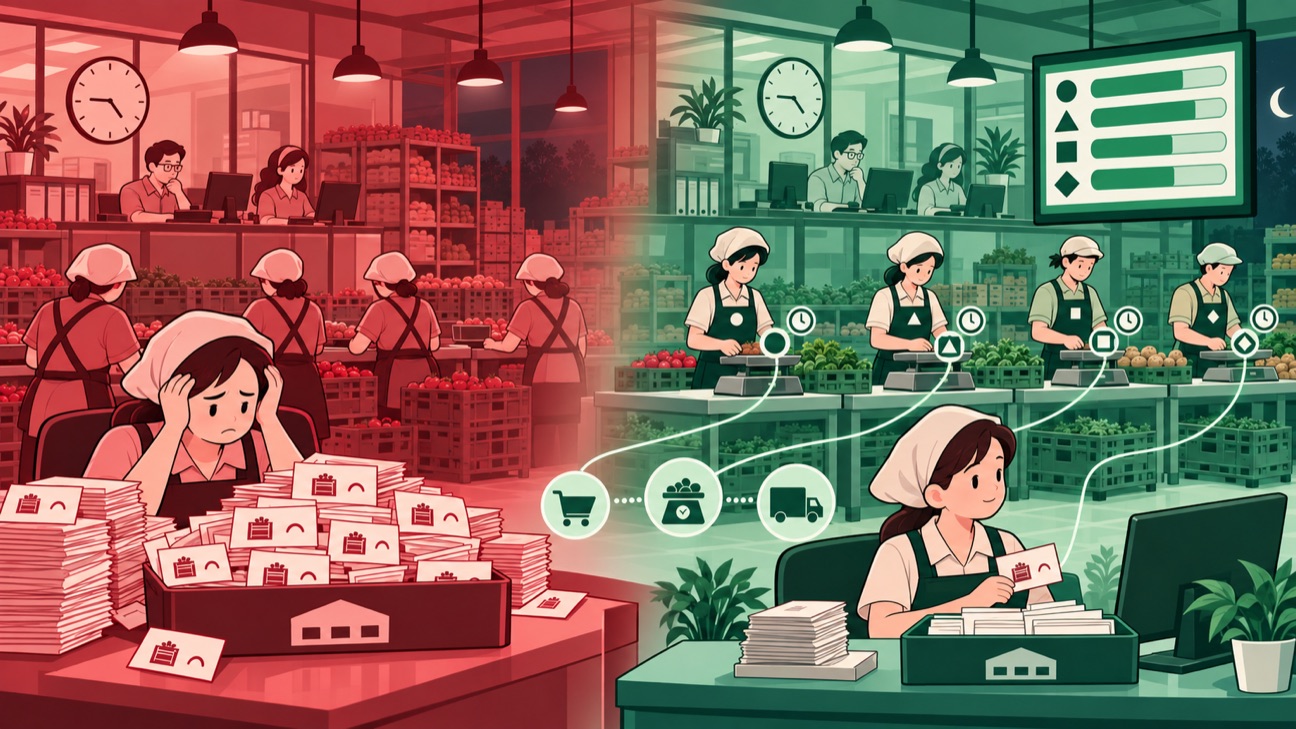
Conceptual illustration. The case is real; company details are disguised.
Complaints about quantity or weight arrived after delivery. The recap was compiled per division, then passed to the depo, the place where goods are prepared and produced before they are shipped. Tracing moved between WhatsApp groups and paper production checklists. Messages about shortfalls existed, but the recap did not include who did the work or when. The complaints were concrete: items not delivered, weight that fell short, or quantities that differed from the order. The recap reported what the customer received. To explain what happened before delivery, the check had to go back and hunt for earlier fragments of records.
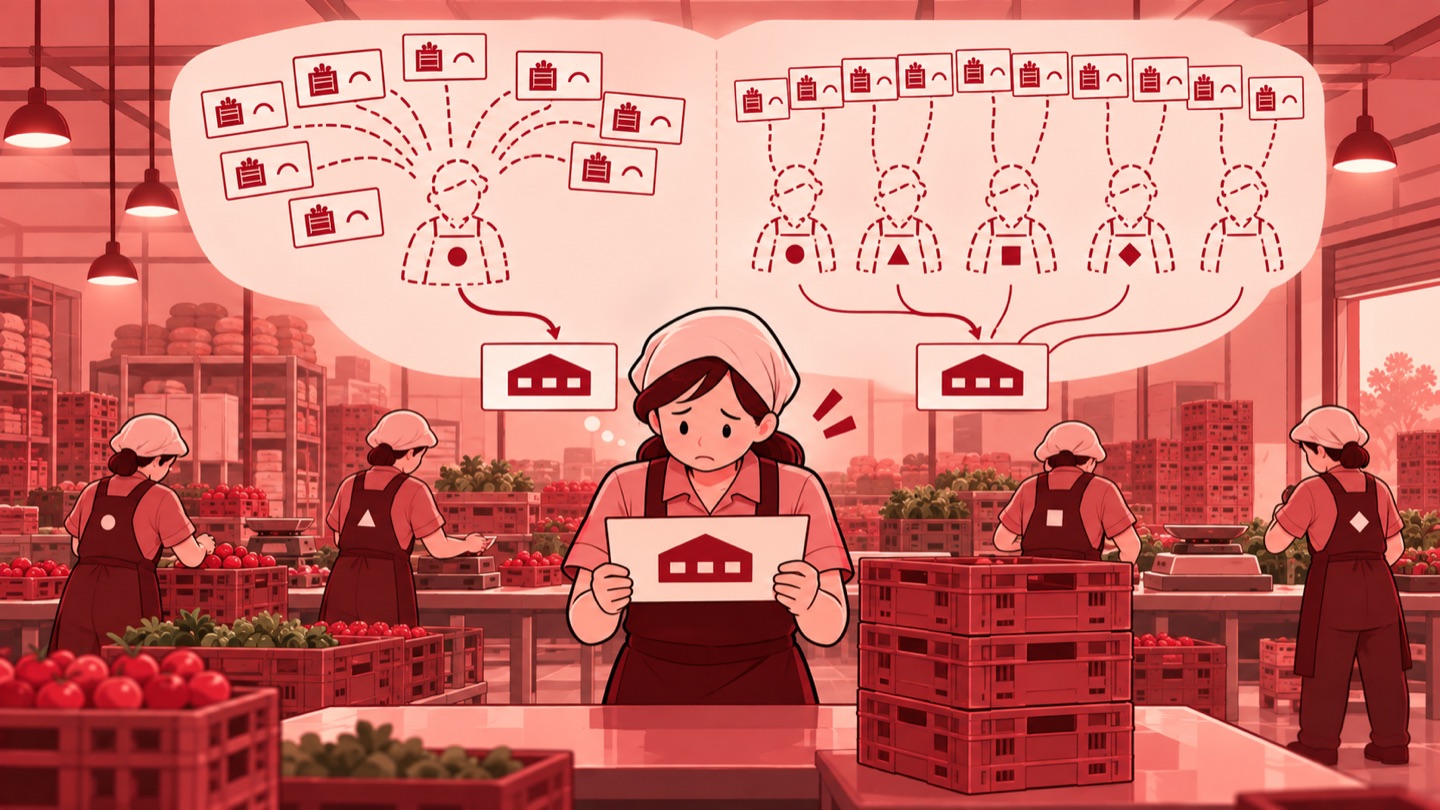
A recap that stops at the division level also lumps different kinds of work together. Repeated complaints from the same job look just like complaints scattered across many jobs. In this process, the cost of replacing goods was charged evenly to the Team Leader, the boss referred to in the title of this article. The charging was already in place, but the trail behind it was not detailed enough: without a record of who worked on an order and at what hour, the cost fell on the Team Leader rather than on the part of the process where the complaint began. The problem lay in the link between the complaint and the production process that gave rise to it.

As head of the IT Division, I worked with the team to change where the data for this tracing came from. The choice was to use records created while production was under way. Every label scan stores who did the work and when. The IT team built that data link into the work process itself, so checking a complaint does not depend on an extra error form or on tighter supervision. The work trail follows the transaction from the moment the work is done.
That link connects sales, production, delivery, and complaints. When a customer receives less than ordered, the check follows the same order back to the earlier stages. The time it was prepared and the time it was made can be read alongside the person who did it. This tracing answers the gap described earlier: charges that used to be spread evenly now have a sequence of work as the basis for deciding them. Customer Service uses it as the basis for checking and recording responsibility. Recording the charge is still done manually, after the case has been traced.
One complaint detail shows why the sequence of the process is more useful than a name alone. The complaint fell into the category of mismatched quantity, with a note that the depo had no stock and a follow-up of a make-up shipment. The same detail recorded two people who did the work, along with the time it was prepared and the time it was made. The check therefore had the context of supply and follow-up. The name on a transaction points to the part of the process that needs checking; the cause is still read from the sequence of events.
The same records also give a reference point for everyday production work. Before, productivity was judged without a clear measure. The performance summary now shows the number of scans, order weight, production output weight, the comparison between order weight and output weight, and the number of complaints per person. A date range brings together the work in the period under review. Conversations about performance now have transaction detail behind the summary figures.
The daily check uses the comparison between order weight and production output as one signal that a record needs to be traced. The Team Leader checks the records and brings a recommended action to the head of the depo. This division of work keeps a clear line between a pointer from the data and a decision about a person. The figures help decide which part to examine, while the decision on action still goes through review and the people with the authority to make it.
The change also touched when work begins. Before, production waited until all of that day's orders were closed. After the change, goods that are in stock start production as soon as a sale comes in. Production used to run until the early hours, close to the drivers' arrival in the morning. Starting on available goods from the moment a sale comes in changes the order of that preparation. A production status screen accompanies the work throughout the shift. Monitoring follows the progress recorded on the production floor, while work that already has an order begins earlier.

In later use, production data is read per division each month and becomes the basis for the commission shared among the division's members. Per-person detail remains material for tracing the work. This way, the way commission is calculated follows the division of work in use, without treating every transaction detail as an individual assessment. The IT team provides the data link, while the process owners carry out the evaluation and follow-up.
My lesson from this change: before deciding who bears the consequences of a mistake, you need a record of how the work was done. That record gives a clearer basis for assigning responsibility.