
Customer Complaints Are Recorded. Why Are Their Causes Still Hard to Trace?
Product complaints arrive in a WhatsApp group and are copied into follow-up records; when the cause needs investigating, the conversations and checklists are opened again.
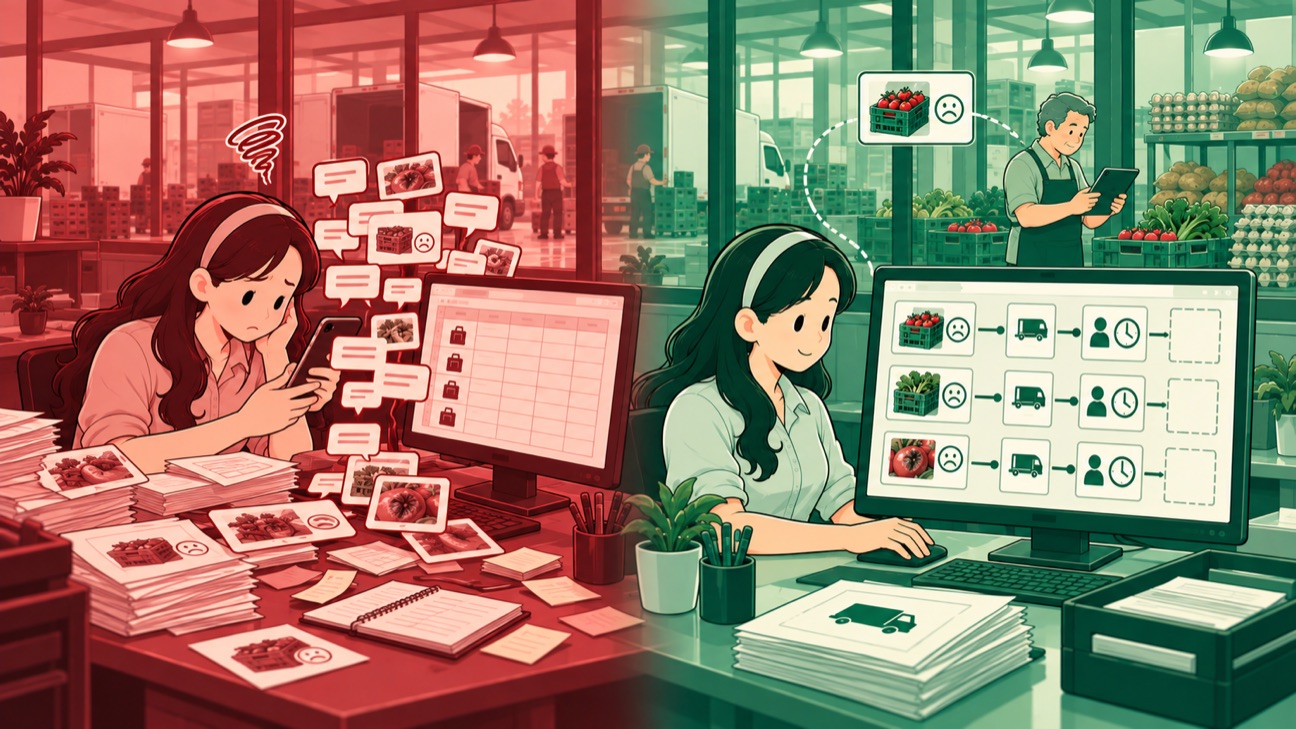
Conceptual illustration. The case is real; company details are disguised.
In fresh food distribution, details of the items being complained about, customer requests, and photographic evidence were mixed into everyday operational conversations. Customer Service, the team handling customer support, read those messages and recorded them again. Complaints had records, but their links to work before delivery still had to be pieced together when an investigation began.
The search continued through group conversations and checklists to identify the processes involved. Handling costs were also recorded manually. Customer follow-up needed item details and customer requests, while process improvement needed a trail through sales, production, and delivery. Both started with the same complaint, but the information needed to address them remained scattered.

I head the IT Division. Complaint recording was then developed to link complaints directly to items and their orders. That connection matters because tracing a case requires following the work that preceded it. The change began through the driver application in 2023, continuing in the next operational application and the Complaint Tracking page for customer service work.
Drivers record complaints during delivery, including the category, item quantity, description, photos, and follow-up options. This information is recorded in the context of the items being handed over. Complaints about quality or quantity therefore have an order reference from the initial entry, alongside the details needed to understand the customer's request.
Recording responsibilities follow the documents. Drivers handle entries and corrections before the delivery note is handed to Finance AR, the team managing receivables and billing. In the normal workflow, Customer Service takes over after that handover. Direct entry by Customer Service is also available for certain customers, following their service workflow.
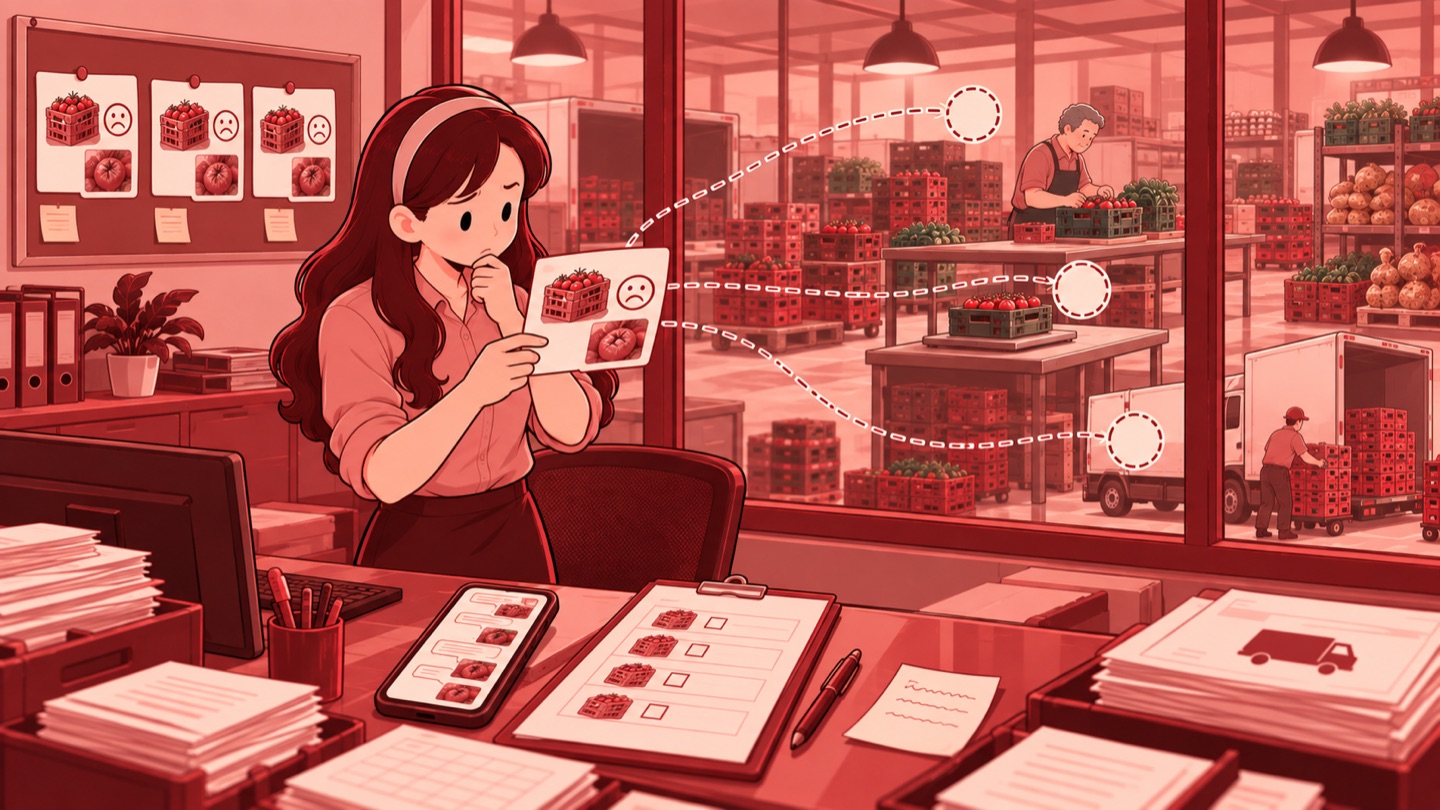
Items that were not produced also have an automatic recording route. The system creates a complaint and sends a WhatsApp notification, as it does for driver complaints. Messages carry case details and related processes. Conversations remain a notification channel, while complaint data is stored with the transaction references needed to handle the case. This automatic route follows production events and can record complaints without photos. Photos are mandatory for entries through user forms. Evidence requirements follow the entry route, with item and order references remaining the connecting thread.
Complaint Tracking brings the queue together by follow-up status. For complaints awaiting confirmation, Customer Service chooses an adjustment or a follow-up delivery on the same or following day. Follow-up deliveries proceed through the related order. Statuses distinguish work awaiting confirmation, follow-up items, or cause analysis.
For investigations, the order link provides context from sales entry, production, delivery, and complaint recording. The team traces the timing and work involved through this sequence. Information previously sought among conversations and checklists now has structured references, so case discussions start with clearly identified items and orders.
Handling costs need separate records. The system calculates the value of the affected items from their quantity and price, while the analysis form provides fields for causes, handling costs, who bears them, and supporting evidence. These costs include purchases from outside the company for same-day follow-up deliveries, with accompanying proof of purchase and receipt. This distinction keeps item value and the cost of meeting customer needs meaningful in process evaluation.
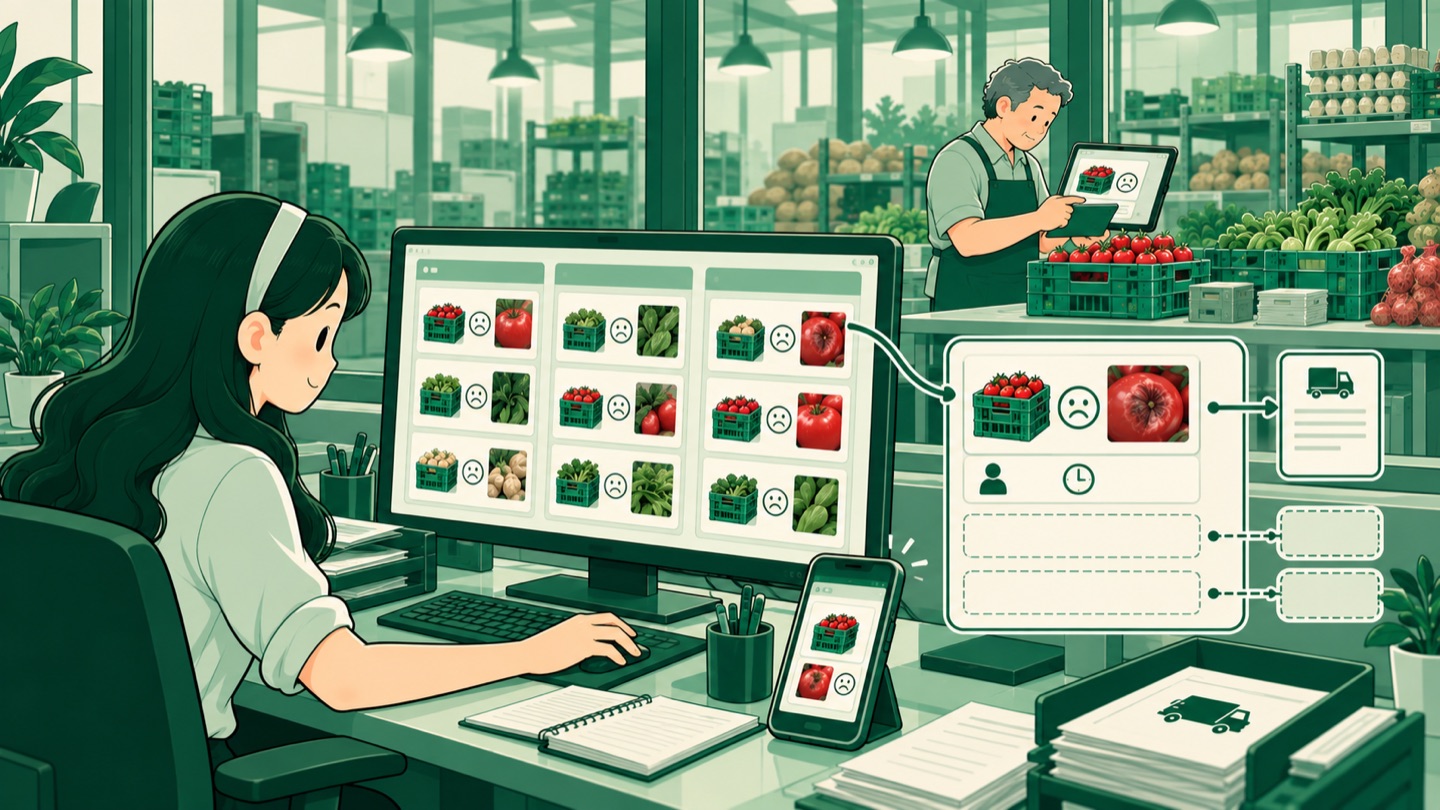
The operational change is that complaints are recorded with their orders, with categories and statuses stored and data available for retrieval. As of September 2026, completing cause analysis, recording handling costs, and developing consolidated reports remained unfinished. Traceability provides a starting point for continuing that work on the same cases.
My lesson: design the link between complaints and orders from the moment a complaint is recorded. That link connects customer requests with the work that needs tracing. Recording becomes a foundation for improvement when the path from the affected item to its cause and follow-up remains connected.