
Seeing Operational Problems Before Anyone Reports Them
Receiving, production, packing, and delivery were already moving, but their progress only became visible in the group when manual reports arrived.
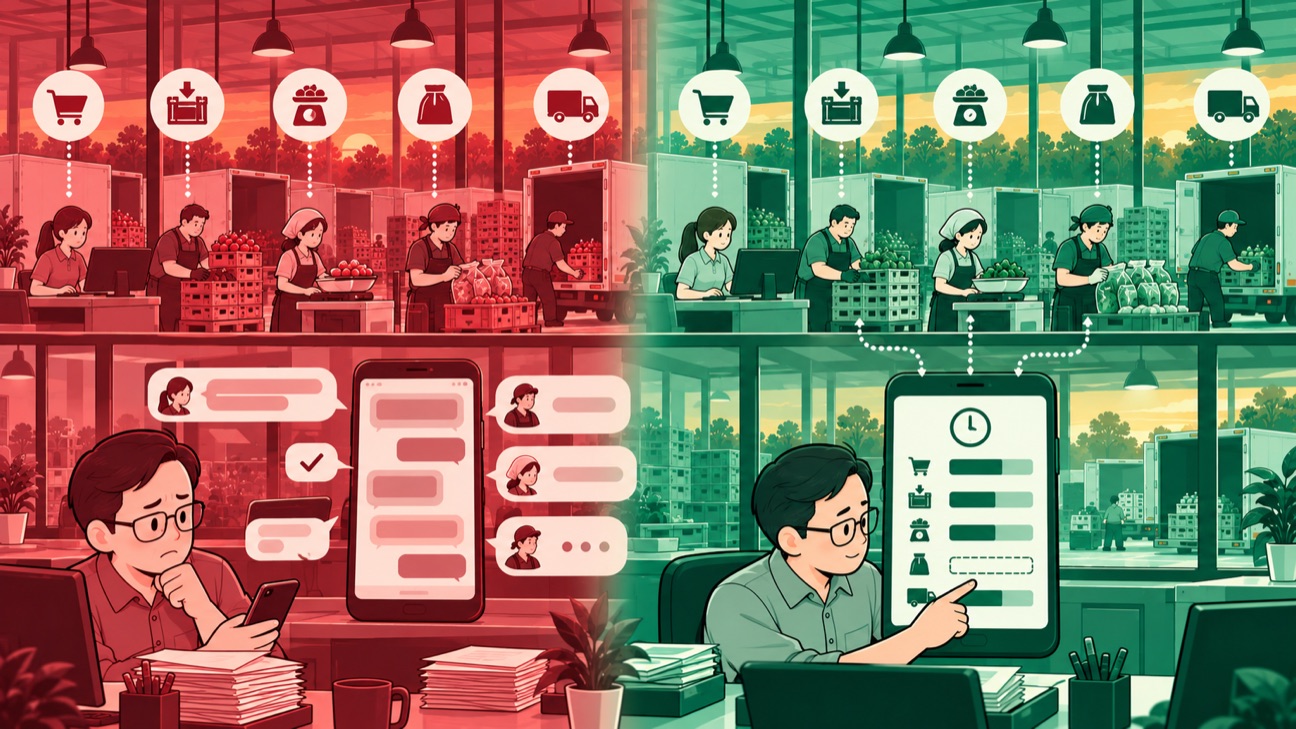
Conceptual illustration. The case is real; company details are disguised.
In a distribution operation that also prepared and packed fresh produce, work ran from afternoon through the night into the following morning. Sales closed in the afternoon, goods were received and processed at night, then packed before morning deliveries. Progress at one stage determined readiness at the next. Late receiving affected production, packing, and delivery in turn.
Until the end of 2024, this picture of progress was assembled from manual reports in a WhatsApp group. Their timing and contents depended on opportunities between operational tasks. Updates from each stage had no consistent form. When the group was quiet, it was unclear whether work was going smoothly or progress simply had not been reported yet.

As head of the IT Division, I worked with the team to build progress summaries drawing figures directly from work recorded in the system. Adding report templates or requesting more frequent updates would still leave reporting to the people doing the operational work. These summaries went to the coordination group at regular intervals, so updates followed recorded work.
In January 2025, combined summaries began going out hourly. Their schedule followed one work cycle, from four in the afternoon to three the following afternoon. Crossing midnight did not break the view of the process. Sales, receiving, production, packing, and delivery to business customers appeared together in messages for the same delivery cycle.
Messages showed progress drawn from each stage’s work. Sales supplied order line counts and goods weight. Receiving showed goods received, production showed work completed, packing showed items prepared, and delivery showed destinations served. Reading progress shifted from freely written reports to process records presented together.

Missing data also gained a clearer meaning: records from that stage had yet to appear. Management asked about the gaps, and the person responsible checked and followed up. Missing figures directed questions towards work records, instead of allowing silence in the group to imply everything was finished. The summary provided a starting point for checking conditions on the ground.
In an example message from February 2025, production was recorded as complete, while receiving, packing, and delivery still showed work remaining. These different positions appeared in one message. Discussions had specific stages to ask about, without first asking every part of the operation to prepare another summary for the group.
The same work also brought production reports for business and individual customers together. Previously, the two order groups were read separately, so the overall picture had to be assembled again. The combined view brought order counts, production progress, and weight together by operational location. Summary figures could be traced to work details when something needed closer examination.
Responsibilities still followed daily work. The IT team scheduled summary delivery and maintained the reports. The person responsible for each stage ensured work was recorded as it happened, then followed up on anything behind. Management read progress within one cycle. Information grew from work being carried out, while group conversations supported coordination and follow-up.
The combined messages eventually became long, while each division needed different details. At users’ and Management’s request, the format changed on 3 September 2025 to notifications in each division’s own group. The combined group remained a place to escalate issues requiring coordination across divisions. The change followed readers’ needs after using shared summaries in daily work.

By September 2026, sales, receiving, and delivery used notifications for their respective areas, while production used a monitoring screen. Packing still had no replacement notification. The combined group continued to handle information that needed to pass between divisions, such as receiving information that needed to be forwarded to sales.
My lesson: to learn about operational problems before manual reports arrive, work records need to become the source of updates. Regular summaries bring questions to the areas needing attention. Their value lies in making the next step clear, and the way they are delivered must follow the needs of the people taking that step.