
Production Data Was Recorded in Full Every Day, Yet It Produced Nothing
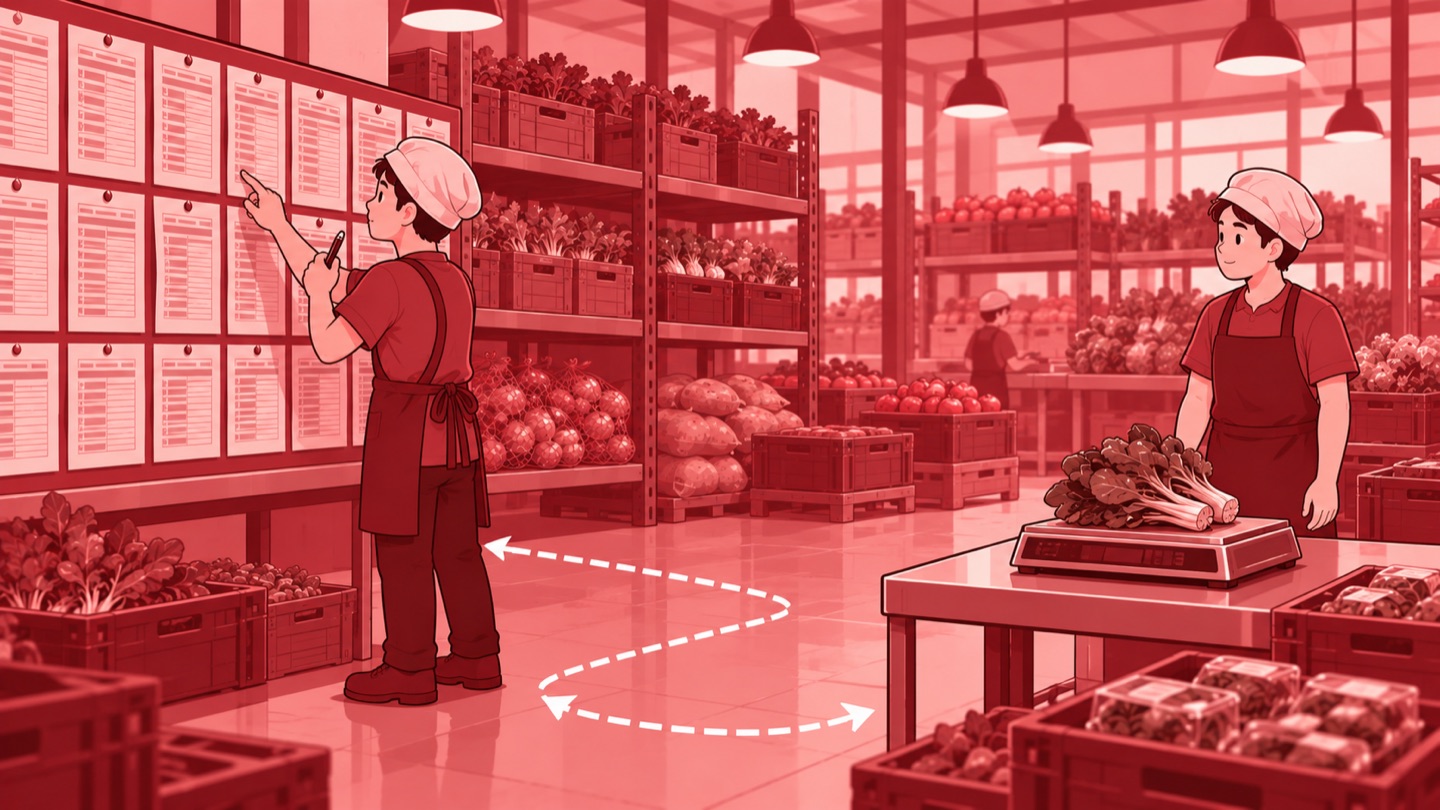
After weighing an item, the QC officer still had to walk to the board, find the right order line, and write the weight down with a pen before moving on to the next task.
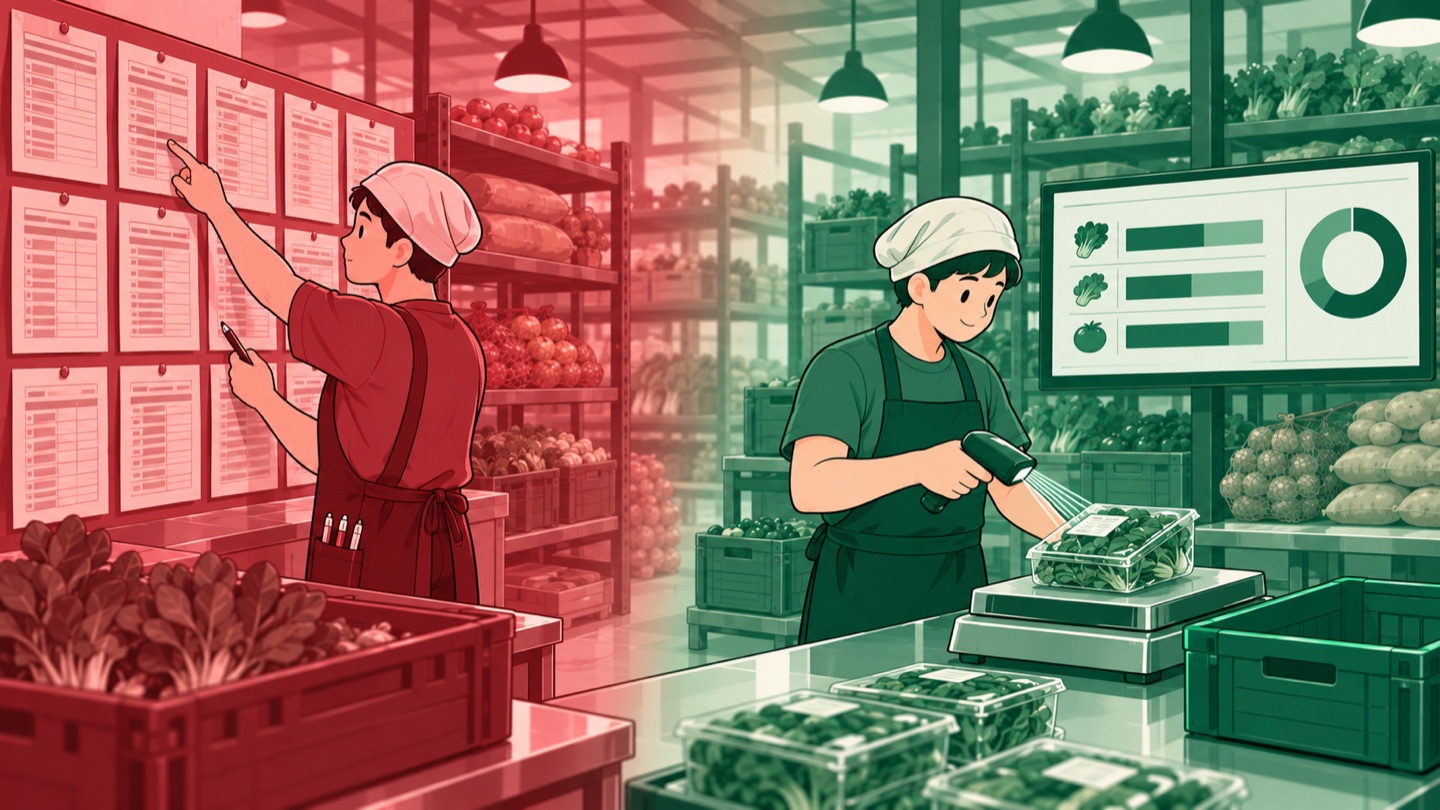
Conceptual illustration. The case is real; company details are disguised.
In early 2023, customer order sheets were pinned to a board on the production floor of a fresh-food distribution business. The quality control (QC) officer weighed an item, then looked for its line on the sheet. The color of the pen showed which officer had made the entry. Every weighing result carried extra work: moving to another spot, finding the item and the order again, then writing the number on the right line.
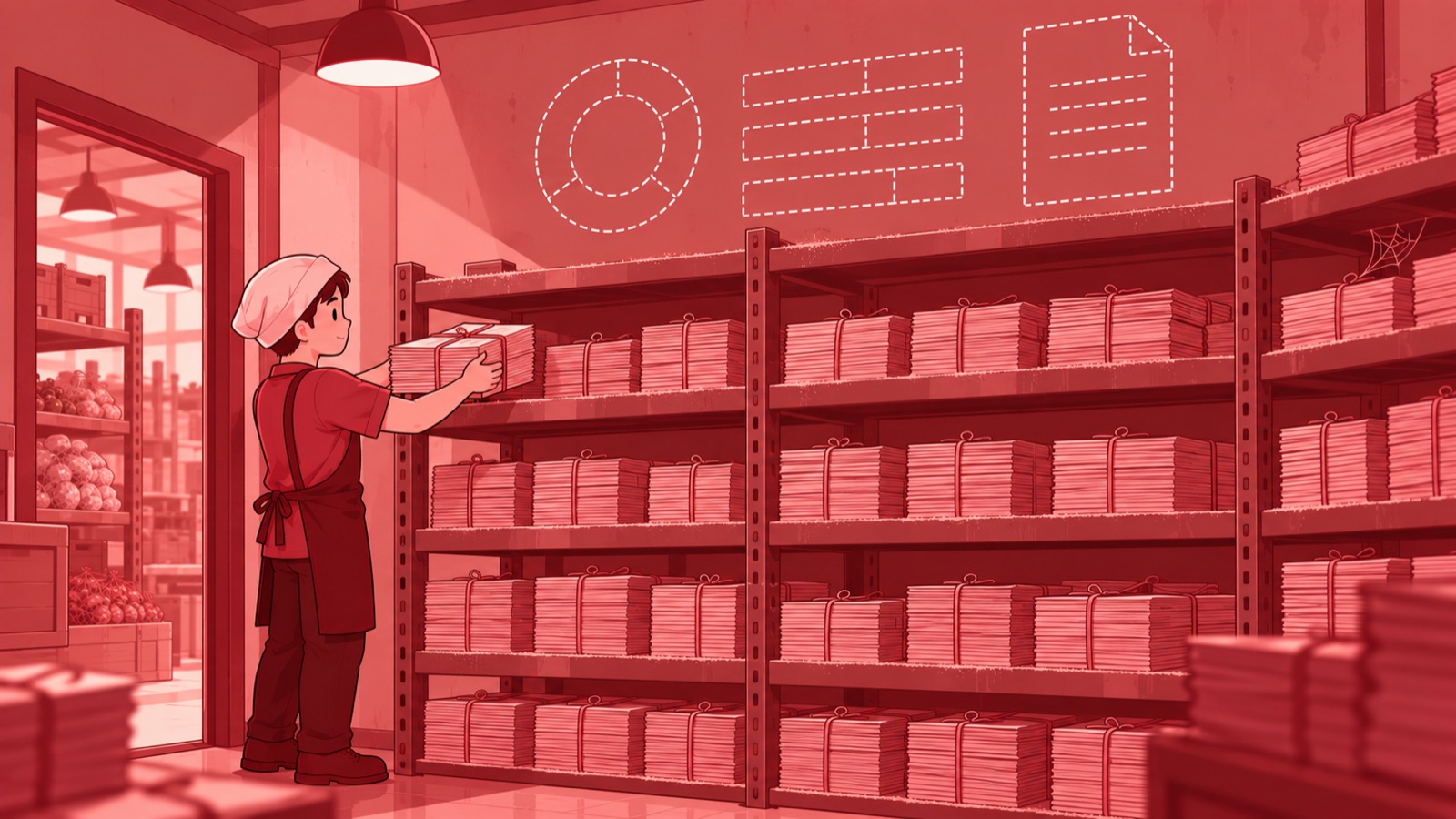
At the end of the shift, the filled sheets were collected, tidied, and filed. The next day, the board was loaded with fresh printouts and the same routine started over. The team's discipline was sound: every weighing result was recorded, every day, with nothing missed. What fell short was the process. The numbers sat on paper, were never compiled, and never reached monitoring. To know where production stood, management still relied on estimates and repeated reports.
As head of the IT Division, I worked with my team to develop recording through item labels. The label was already part of the production process, so it could be used to identify an item and its order. What changed was how work results entered the record: after packing an item, the officer scans the label and enters the scale weight into the system. Searching for a line on the board was no longer a step to get through every time something was recorded.
The weight is still entered by the officer at the weighing point. The scan identifies the order record it belongs to, and the system stores who did the work and when, together with the result. The officer's identity is no longer marked only by pen color. When a job needs to be traced back, the team can open the link between the order, the item, the QC officer, and the time of recording, without hunting for the sheet that used to be pinned to the board.
This change also altered what a record is good for once it has been made. The recorded results fill a production monitoring screen that shows the target, the progress, and the time remaining. The depo head, who leads the order preparation hub, can see where the work stands whenever needed. The question of how far production has come now has a place to be answered, because the status comes from work recorded by the officers themselves. Numbers that used to end up in the archive can now be read while operations are still running.
Use began at one depo in March 2023, then extended to a second depo in May of the same year. At the first depo, the checklist board was taken down at midnight on the first day the system was in use. The decision came from the depo head himself. His reasoning was that the system now represented the activity that used to be done by hand, so the board no longer had a function. To me, that was the sign the implementation had worked: the person responsible for the production floor was the one who let go of the old way. Production sheets stopped being printed, and officers carried on recording through labels and the system.
At the second depo, the production team also gained the ability to print labels themselves. Before, the start of the work depended on an admin who prepared the labels. Moving the printing function meant the production team could prepare them as part of their own work. This development touched the everyday division of tasks, beyond changing where the numbers are recorded. The label links preparation, weighing, and recording in a flow that production staff can carry out themselves.
When the depo head opens the monitoring results, the progress figures can be discussed together with the list of items and needs still waiting. The team can connect the production position with conditions on the floor, including items currently being worked on or supplies that have not yet arrived. A shared status gives operational conversations a basis. The people leading the work do not have to begin a discussion by gathering all the weighing results again from separate records.

The difference I see in this flow lies in the link between recording and using the record. Officers still weigh and check the items. The production team still works through the orders. But the result of that work now leaves a linked record that can be reopened, and it updates the production position at the same time. The effort of recording produces something the team uses the same day, not just a bundle filed away after the shift ends.
My lesson is a simple one: the discipline of recording only pays off when the process carries the record to the people who need it before the day is over. By forming the record at the weighing point and linking it to monitoring, a team that was already orderly now also drives the day's work.