
Make It In-House or Buy It Ready-Made? Start by Working Out the Cost of the Bundle
When an order for vegetable bundles changes, the requirement for every ingredient has to be recalculated before production can start.
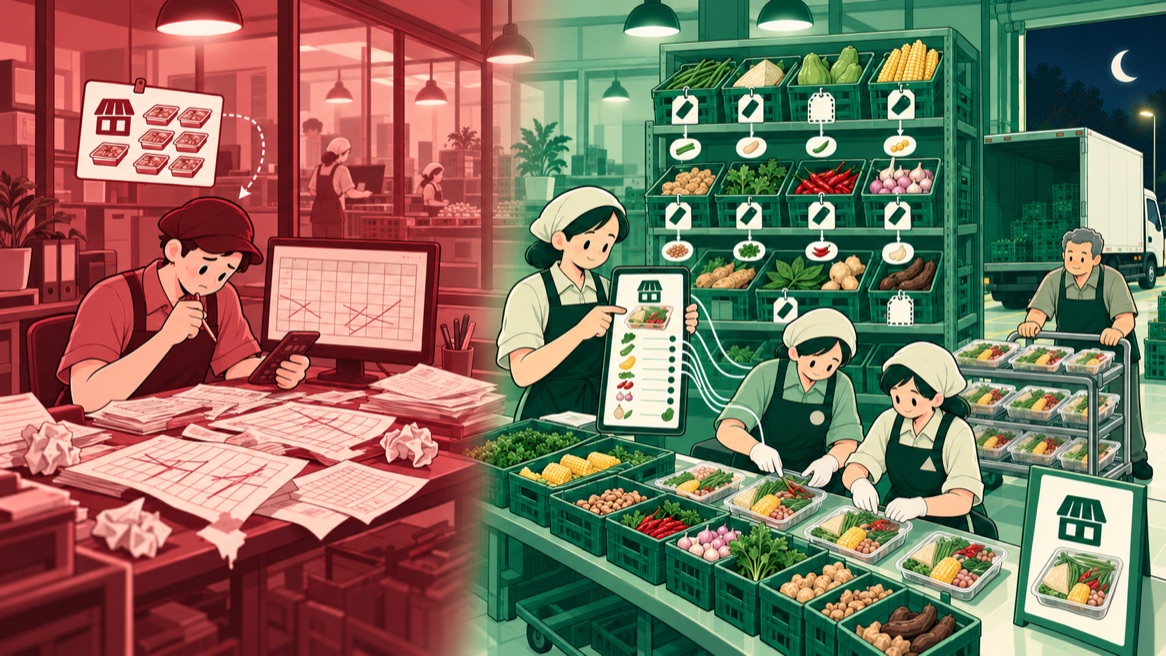
Conceptual illustration. The case is real; company details are disguised.
A ready-to-cook vegetable bundle contains several ingredients in different quantities. When the number of bundles ordered changes, the requirement for every ingredient changes with it. This calculation used to happen in Google Sheets, separate from the production work. The list of orders had to be translated again into ingredient requirements before bundle assembly could begin. The physical work at the production table started from the result of that calculation.
In this distribution business, which also assembles bundles for retail networks, the problem went beyond how many ingredients to prepare. When orders were still uncertain, production had several options: do it with the internal team, bring in temporary workers, or buy ready-made bundles from an outside party. Weighing those options requires a cost basis. The cost of ingredients, packaging, and labor had not yet been brought together in a single bundle calculation.
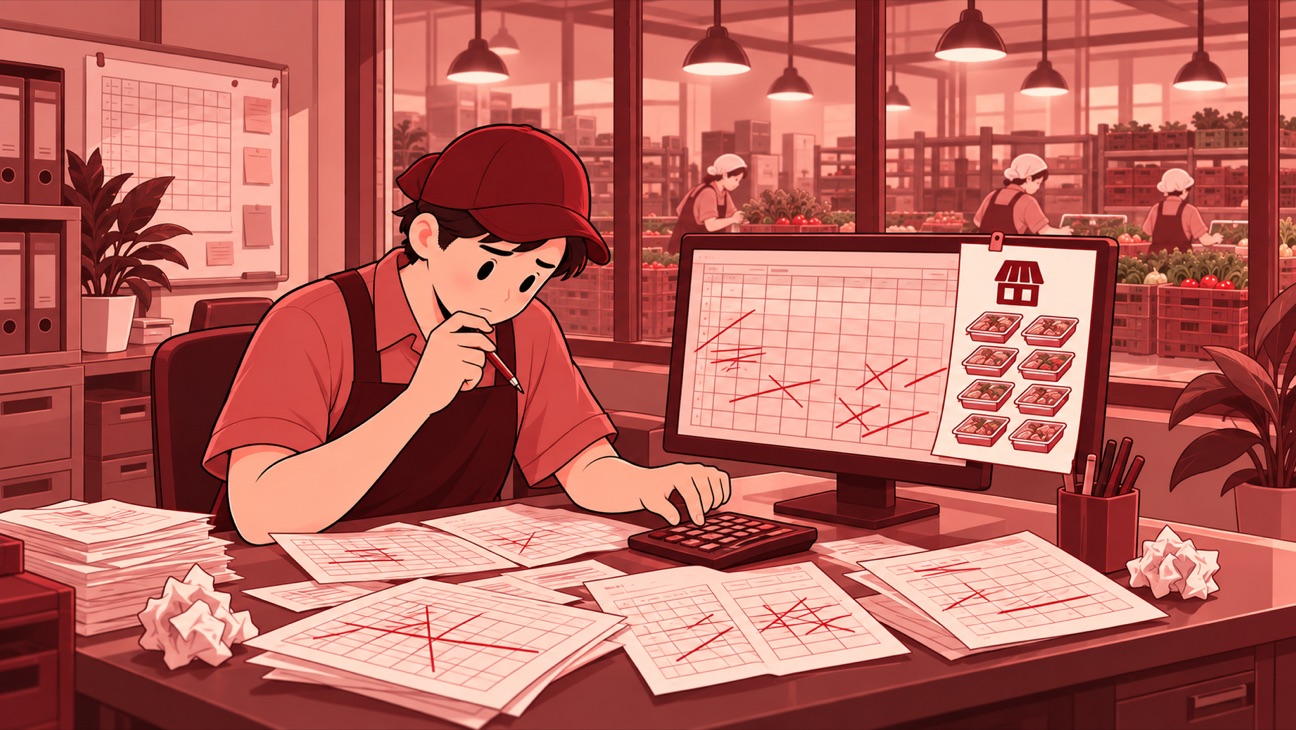
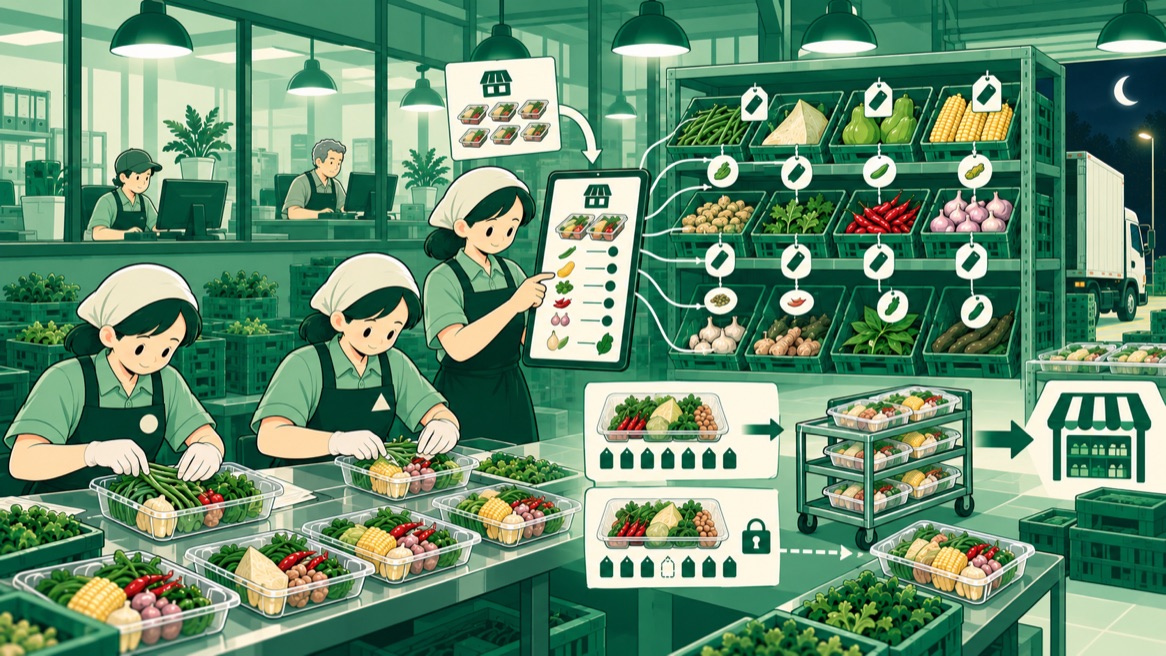
As head of the IT Division, I worked with the team to connect the number of orders to the composition of each bundle. The composition holds the quantity of each ingredient needed for one bundle. The system uses that structure to multiply each ingredient's requirement by the number of bundles ordered. The resulting requirement list then becomes part of the production transaction, following the orders to be fulfilled. Recalculating in a spreadsheet was replaced by a calculation drawn from the order data itself.
The team at the Depo, where goods are prepared and bundles are assembled before delivery, continues to run its production work. The transaction records the ingredients used, the ingredients wasted, and the ingredients returned. The calculated requirement and the actual ingredient usage sit in the same chain of work. As a result, the production preparation details are directly linked to what is recorded when a bundle is finished.
The ingredient requirement calculation is also tied to whether a bundle is ready to sell. All component ingredients must be active in the system and have a tender price, meaning the reference price from the supplier selection process. If that condition is not met, the bundle is not activated for sale. Ingredients that are already registered need a price basis before the cost calculation moves on to the next process.
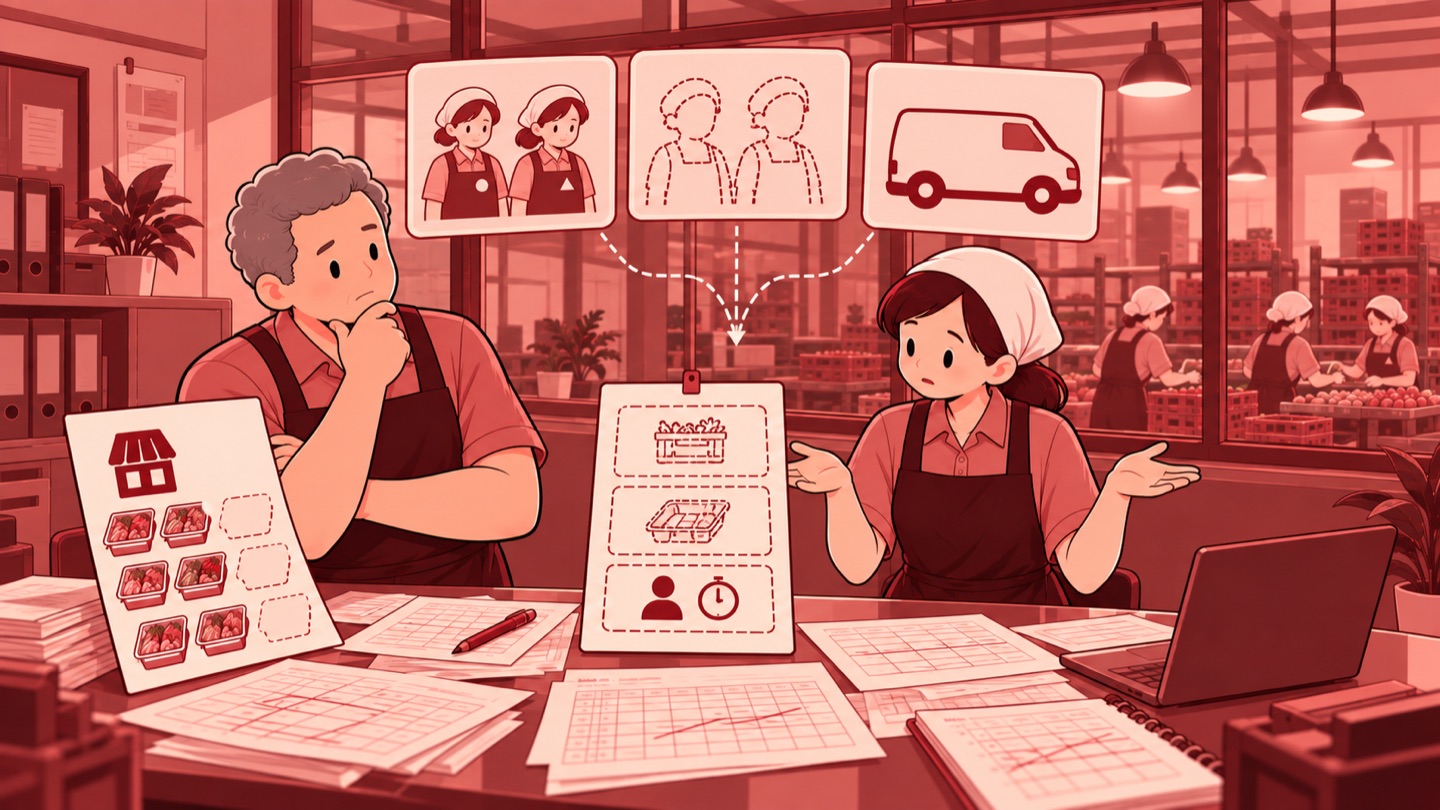
For bundle costs, the system separates the price of all ingredients, the packaging cost, and the labor cost. Ingredient prices use the tender reference already in place. The price control team and Sales set the packaging cost when the product is put together, then review it when ingredient prices change. This separation ensures that packaging cost is included in the bundle calculation, even though it is not part of the ingredients the customer eats.
Checking that prices are complete follows the weekly tender process, with a monthly review of the recap. The IT team maintains the calculation function and checks the ingredient requirements and the completeness of the cost data. This division of work links the setting of packaging cost with the upkeep of the calculation that uses it.
The production calculation now translates the number of bundles into the requirement for each ingredient automatically. The number of bundles multiplied by the composition gives the requirement for each ingredient. Cost is split into ingredients, packaging, and labor; ingredient and packaging prices are filled in, while labor is not yet. Preparation work now starts from a calculation derived from orders, and cost discussions can look at each element separately.
The labor cost per bundle still needs to be completed. How to set the reference is already clear: the normal time one person needs to finish one bundle, multiplied by the temporary worker rate. Time and rate follow the condition of the goods, the availability of workers, and the agreement made when help is needed. A single fixed rate for every type of bundle would ignore the differences in the assembly work. The head of the Depo is responsible for updating that reference according to operational conditions.
During the period when orders were not yet consistent, this calculation served as a basis for weighing in-house production against buying ready-made from an outside party. It was not yet a full comparison, because the labor cost had not been filled in. Developments in orders then changed the operational choice. Once retail orders became consistent and the internal workforce was prepared, assembling bundles became part of the Depo team's work. According to the process owner, buying ready-made from an outside party was no longer chosen because it thinned the margin. The decision on how to produce follows the state of orders and the readiness of internal work.
My lesson: a production decision needs two different answers, namely how much of each ingredient to prepare and which costs come with doing the work. Connecting orders to composition settled the ingredient requirement calculation. Separating ingredient and packaging prices gave a footing, and the cost calculation is only complete once labor cost is filled in. Until then, the calculation serves as a basis for consideration, while the way of producing continues to follow the state of orders and the readiness of internal work.