
A Third of Your Sales May Be Priced Wrong
Tomatoes that must be sorted one by one can still sell like ordinary tomatoes, because the extra work never shows up in the records.
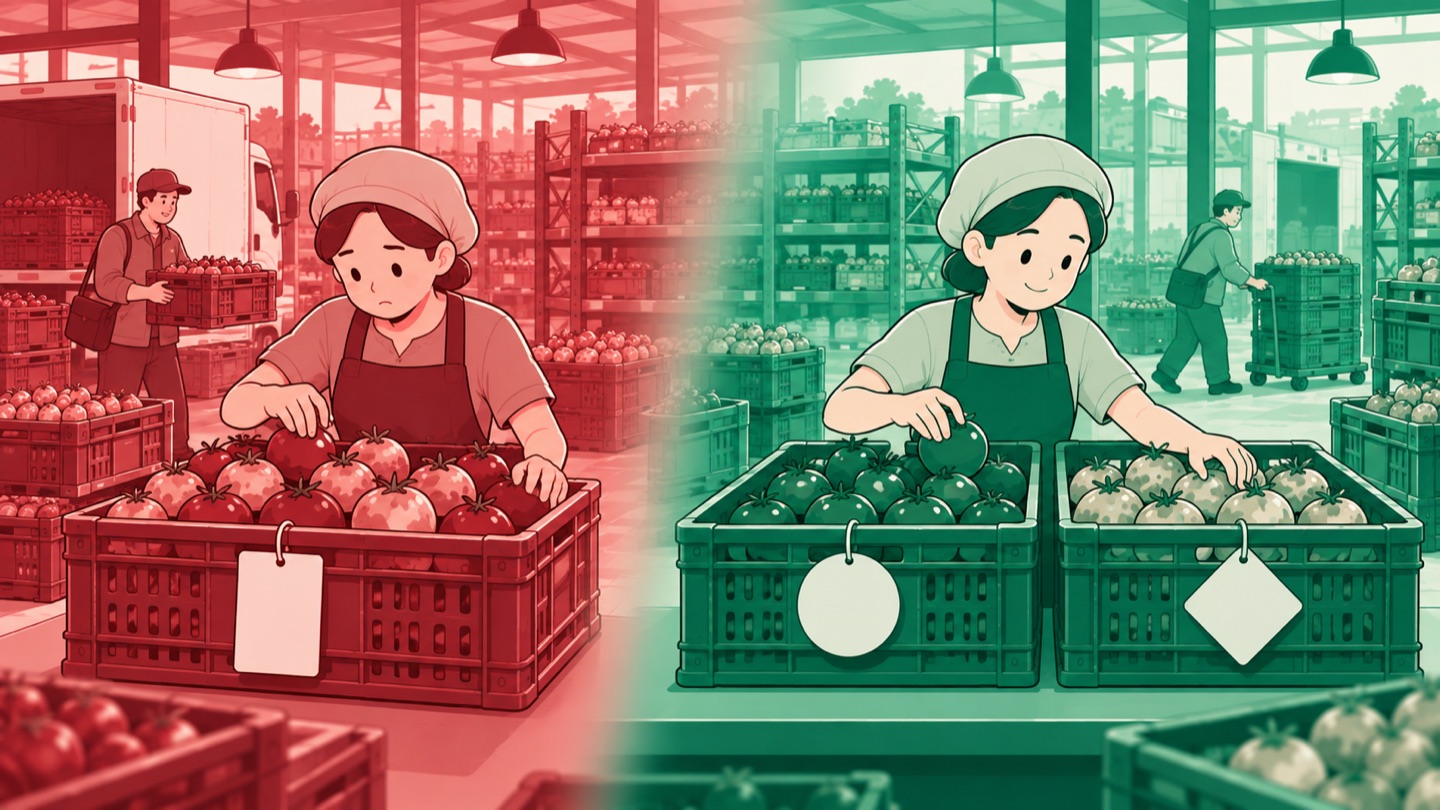
Conceptual illustration. The case is real; company details are disguised.
Customer orders carry work such as sorting tomatoes or cutting vegetables before the goods ship. At a food distributor that also processes ordered goods, special requests appear in everyday orders. Some customers ask for tomatoes that are all red; others want vegetables cut. The base product is the same, but the work needed to prepare it is not.
In the old workflow, these specifications were free-text notes retyped whenever an order was created. The Depo team, who handle storage and preparation of goods, sorted regular stock to meet those requests. Buying goods to a special specification could also cost more. Yet the records still merged them with ordinary goods, so the difference in the cost of fulfilling an order was not clearly visible when the price was set.
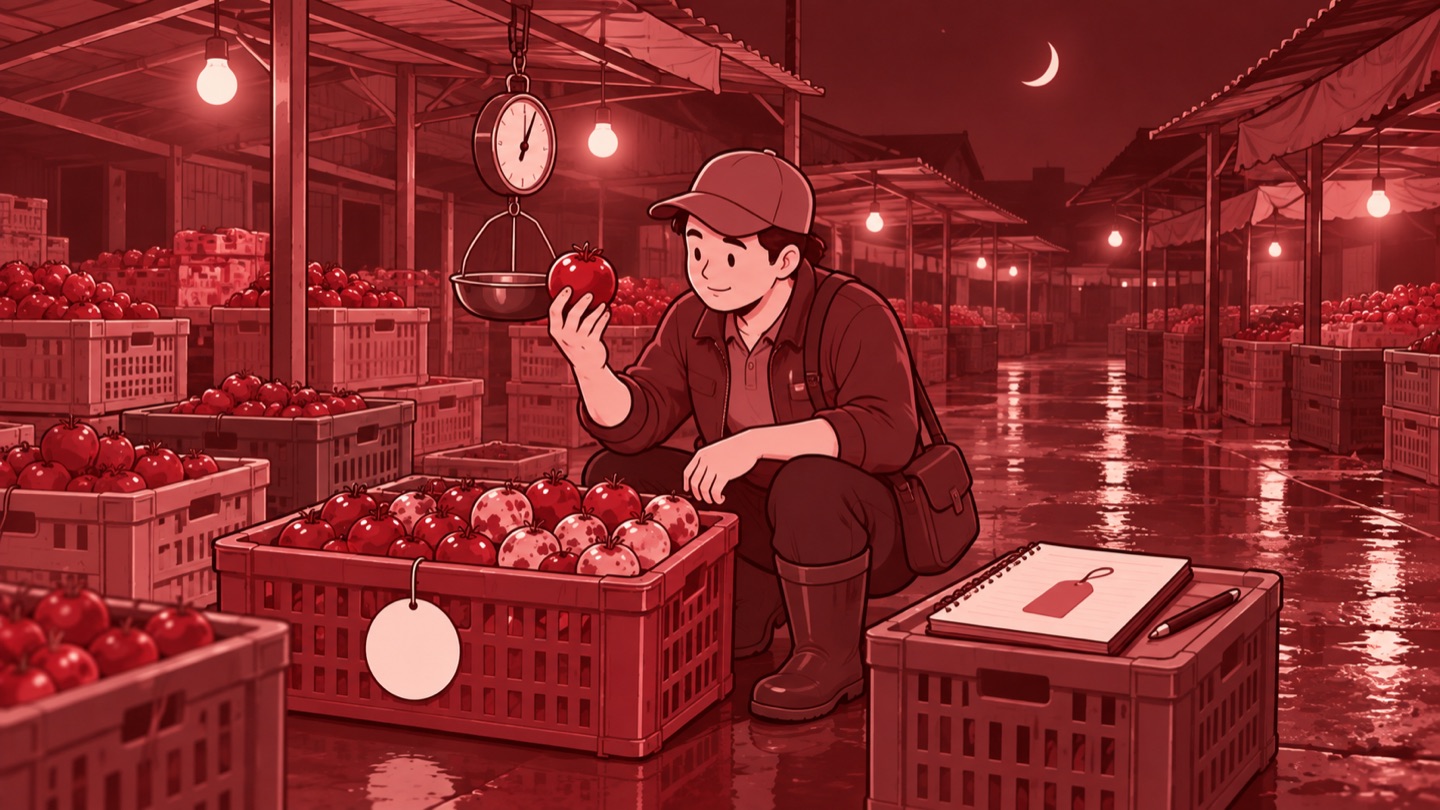
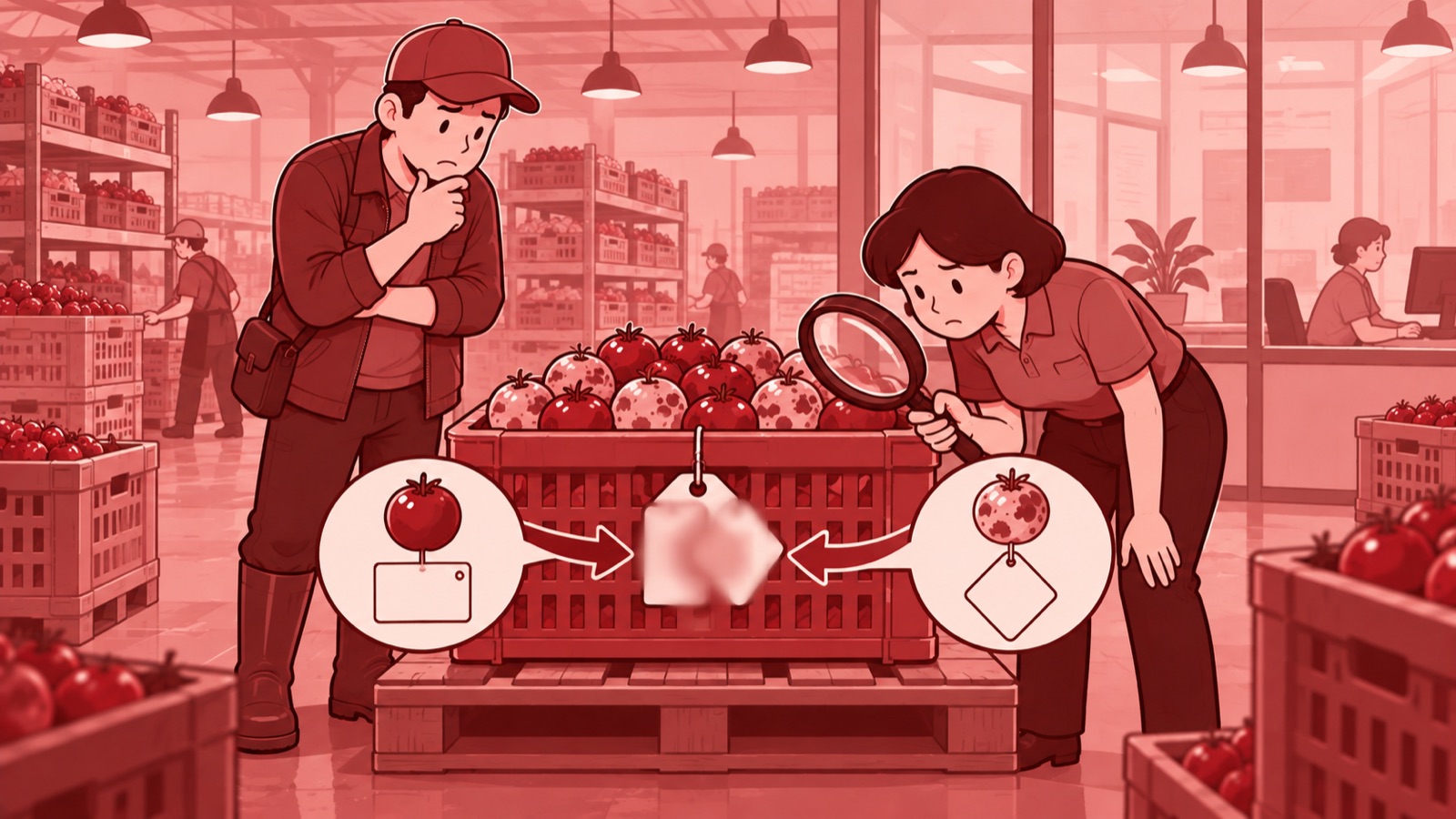
Goods that needed different handling still shared the same item code. Their purchase cost was blended into the cost of regular goods. The selling price of a special specification could sit close to that of ordinary goods, and in some examples even lower. The request note already said what the customer wanted, but it did not separate the goods and their costs in the price calculation.
In one sample of July 2023 sales, goods with special specifications made up about a third of sales value. A group this large deserves a look at how its prices are set; that does not mean all of it was mispriced.
Two shortcuts were not taken: adding an emergency cost column filled in by hand, or asking the purchasing and sales teams to record more carefully. Both add work to a workflow that was already heavy, so the burden would only move elsewhere. As head of the IT Division, I worked with the team to fix the workflow itself, step by step: order input first, then separation of goods.
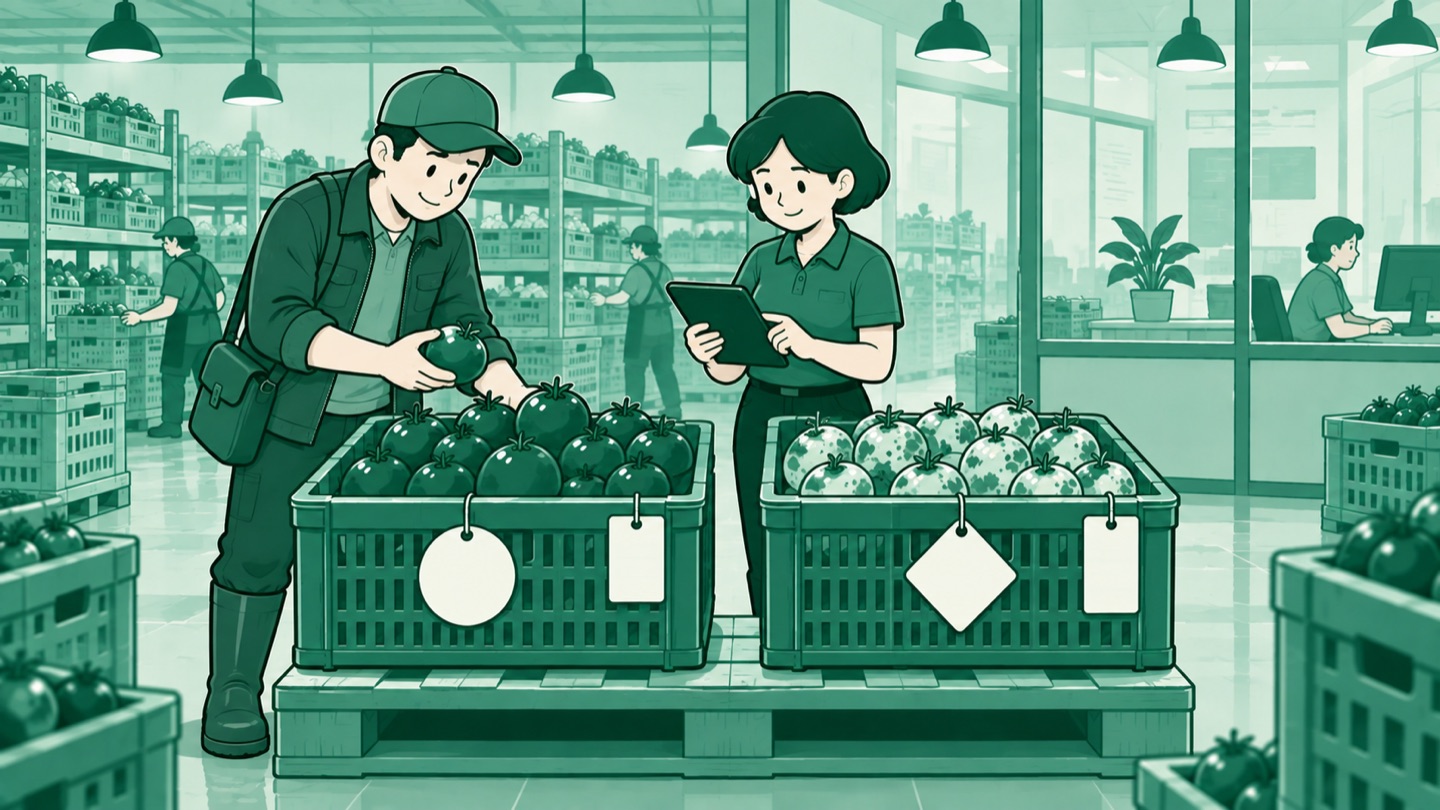
In the next stage, specification management matured. A special request was no longer just a customer note; the goods had a code of their own. Tomatoes with a given specification were separated from regular tomatoes in cost-of-goods and sales calculations. The separation follows how the cost arises, so goods sorted in-house are handled differently from goods already processed by the supplier.
For work done in-house at the Depo, such as sorting tomatoes or cutting vegetables, the added preparation cost is automatically included in the selling price. The calculation follows the weekly purchase reference price, so it adjusts when prices change. The team no longer has to remember to add that cost to each order one by one. The need to prepare special goods is now connected to their price.
Goods already processed by the supplier are handled differently: their purchase price is higher by nature, so the records use the matching purchase price. Some specifications are truly different and are set up as separate goods, with their own purchase and selling prices. With these three treatments, supplier-processed goods are not costed like internal preparation work, and different goods no longer blend into regular goods.
The input improvement supports this separation. Since March 2023, entering one order has dropped from four steps to two. At the first stage, specifications were stored per customer and appeared automatically when an order was created. Once special-specification goods had their own codes, the admin picks an existing item and fills in the quantity. That choice of item is what links the order to the right price.
A new specification is submitted to the IT team, who check it and create it according to the rules for recording goods. The admin no longer needs to write a free-text note that applies to only one order. This goods-management work can now be covered by other members of the IT team, while the admin keeps choosing from goods already prepared in the system.
Previously, order data was copied by hand into a worksheet used by the purchasing and Depo teams. Since 2023, a robot has updated that worksheet automatically every five minutes. In 2026 the worksheet was retired, and both teams now work directly in the same system. For goods prepared in-house at the Depo, the preparation cost has been included in the amount charged through the selling price in sales from August 2025 to July 2026. The work of sorting and cutting no longer disappears into the cost of ordinary goods.
My lesson: recording a special request is not enough if the price still treats the goods like ordinary goods. The difference in work needs to be built into how goods are recorded and priced.