
Sales Grow, and the Admin Team Is Not Overwhelmed
Orders keep arriving from the app and the marketplace, but before any goods are prepared, the sales data still has to be downloaded and uploaded again into the operations system.
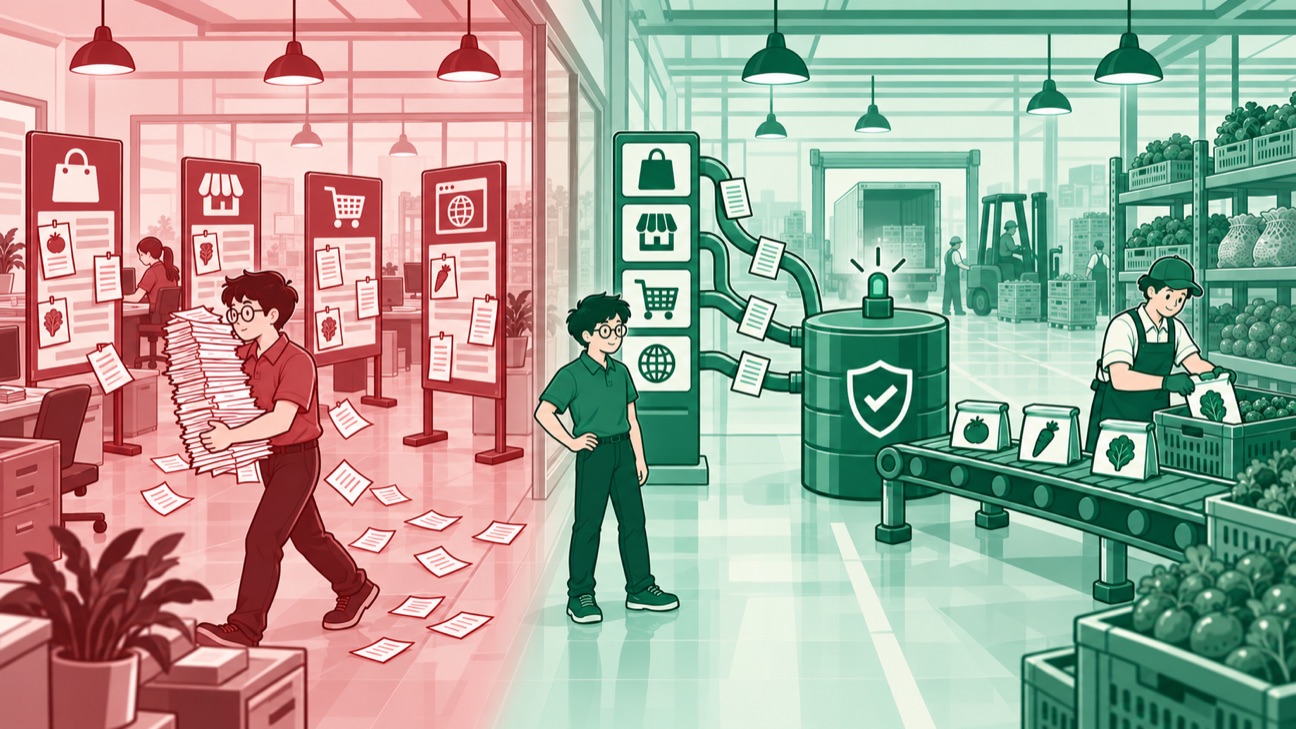
Conceptual illustration. The case is real; company details are disguised.
In a fresh food distribution business where my team and I worked, marketplace orders were kept on their own sales screen. The consumer shopping app had its own place to record orders as well. An order had already been received from the customer, while procurement was still waiting for the data to be moved so it could know what to buy. The link between online sales and operational work ran through administrative tasks every day.
Before sales closed for the day, data was downloaded from the place where customers ordered, then uploaded into the internal system. Every additional order added more data that had to go through that step. If an order was missed during the transfer, the next team could not see the need. As sales grew, the work of connecting those recording points grew with it, before the team could even start preparing goods.

As head of the IT Division, I chose to remove that repeated transfer step so that sales growth would not burden the admin team. Together with the team, I built a path that brings orders into the operational database. The development team connected the order sources to the sales system, while the sales team monitored data completeness and passed problems on to the IT team. The admin work shifted from moving orders to making sure the flow was running.
The entry path was matched to the way customers order. Marketplace orders are pulled in automatically every thirty minutes during operating hours. Orders from the consumer shopping app are recorded directly in the same database. Digital sales no longer wait for the daily download-and-upload routine before they reach the internal system. The order data is passed along through a connection between systems that the team built.
For business customers, I kept order entry by the admin, because they still want to be served when they order. A way to enter orders themselves was already available, but business customers had not used it. The admin team still receives and records their orders. This choice follows the way customers shop: the work of serving them continues, while the transfer of data from digital orders already recorded elsewhere is automated.

Orders from the minimarket network are also recorded by the admin. Individual sales, seasonal parcels, bazaars, and exhibitions have an official recording path in the same system. They come in differently, but the results meet in a shared sales record. The team does not need to force every type of customer to use one uniform ordering method for their demand to be recorded and passed on to procurement.
From that shared record, orders form the procurement need without being copied again into another worksheet. What customers ordered becomes the basis for purchasing, preparation, and delivery. This link matters in an operation that buys goods based on demand: orders that have come in need to be readable by the next process right away. The admin checks the same data flow that is used to fulfil the orders.
Before the daily close, the team runs a pull of orders that have not yet come in and checks that they are complete. If the automated process runs into trouble, the problem is passed to the IT team. As long as the internal system is available, transactions are still recorded through the sales menu with their marketplace origin. This path gives a clear working step when the automatic pull stalls, without returning the whole daily routine to download-and-upload.
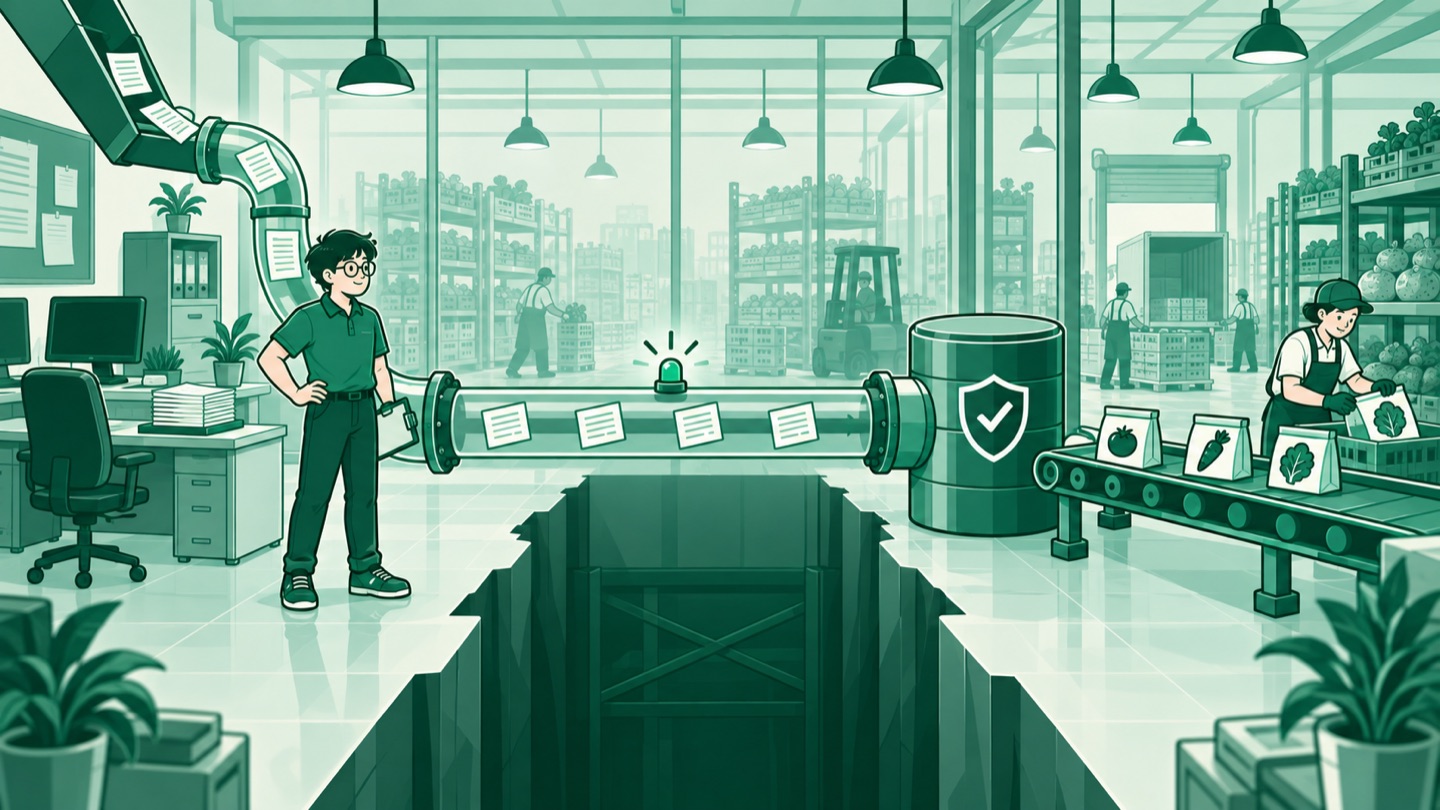
In June 2026, the recorded peak of marketplace orders reached more than seven times the volume of August 2025. At the same time, the team's scope widened from selling directly to consumers to also handling the minimarket network. Removing the transfer of digital orders freed up room for that wider scope, while the admin team continued to serve the ordering paths that need their involvement.
Day to day, the team's attention is on the completeness of orders and on handling transactions that stall. Digital orders come in through the automatic schedule or directly from the app; the admin still records orders from the customers they serve. Growth in sales does not require the team to repeat the copy-the-data work for every additional transaction. The system takes over the repetitive part, and daily monitoring keeps orders available to operations.
My lesson: a team's capacity grows when repetitive steps leave its daily work. Choosing what to automate must still take into account how customers want to be served, so that sales growth goes hand in hand with an administrative process able to keep up.