
Sales Can Cross-Subsidize, and the System Protects the Margin
Negotiated prices were already being used to ship goods, while their gap against cost was only traced after the transaction had run.
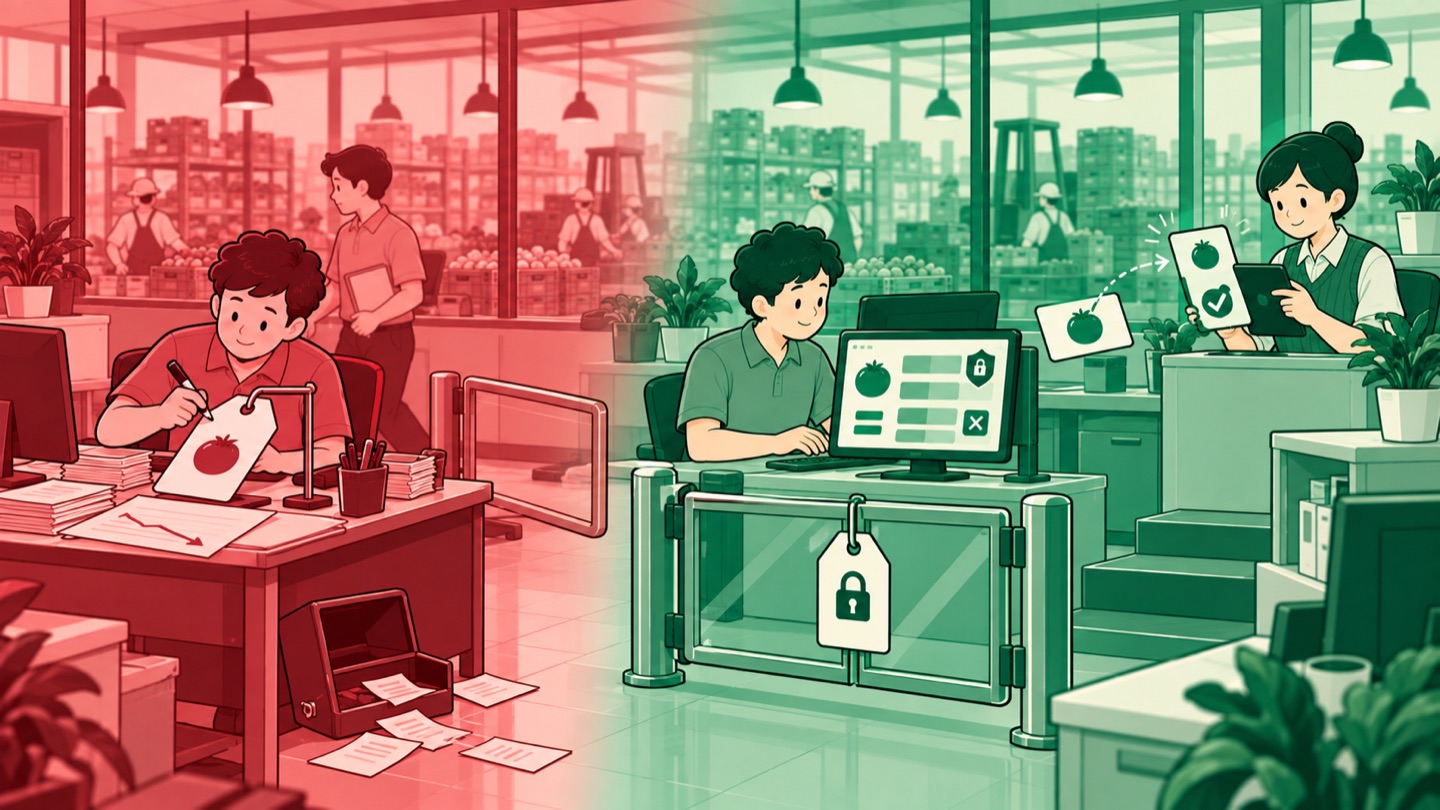
Conceptual illustration. The case is real; company details are disguised.
At a fresh food distribution business, a weekly tender produced a cost reference for every item. The results were shared with the purchasing and sales teams. On another screen, prices negotiated with customers were registered for use when selling. A selling price has to leave a margin, or a sale turns into selling at a loss. The margin tracked in this system is the gap between the selling price and the cost reference from the tender.
At that point, the reference and the selling price did not meet in any binding check. A price out of step with its cost still went through as the basis for a sale. Goods were delivered and invoices issued, and the margin problem only became visible after the transaction. A concession that had truly been decided for a customer was hard to tell apart from a price that was running without any recorded decision.
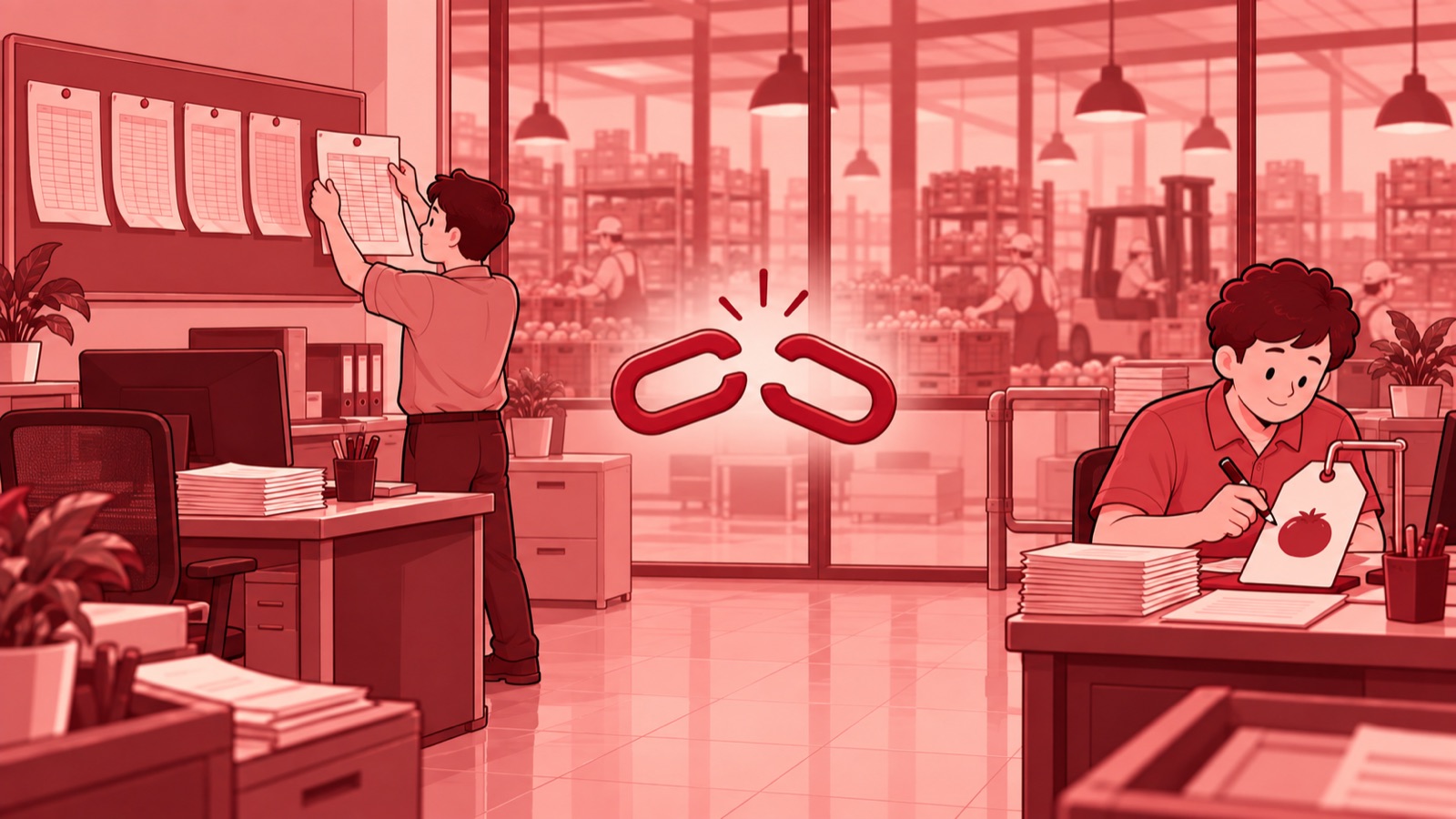
On the commercial side, a customer can buy several kinds of goods at once. The price of one item is deliberately set lower because the purchase of another item covers the difference. This kind of cross-subsidy still deserves a place in negotiation. What needs to be clear is which items and customers it covers, how long it is valid, and who approves the special price.
As head of the IT Division, I worked with the team to move the check to the moment a selling price is registered. The development team connected the tender reference, price registration, and special-deal requests. The testing team and the data stewards checked the margin definition and its calculated results. With these links in place, a commercial decision has a path in the system before its price is used in a sale.
The Price Controller stands apart from the purchasing and sales teams because it sets the reference for both. Purchasing is kept from going above the reference price, while sales is kept from going below it. That position brings the needs of both sides together on a reference set by management. On the sales side, the Price Controller decides exceptions based on purchase volume, customer profile, and management's judgment.

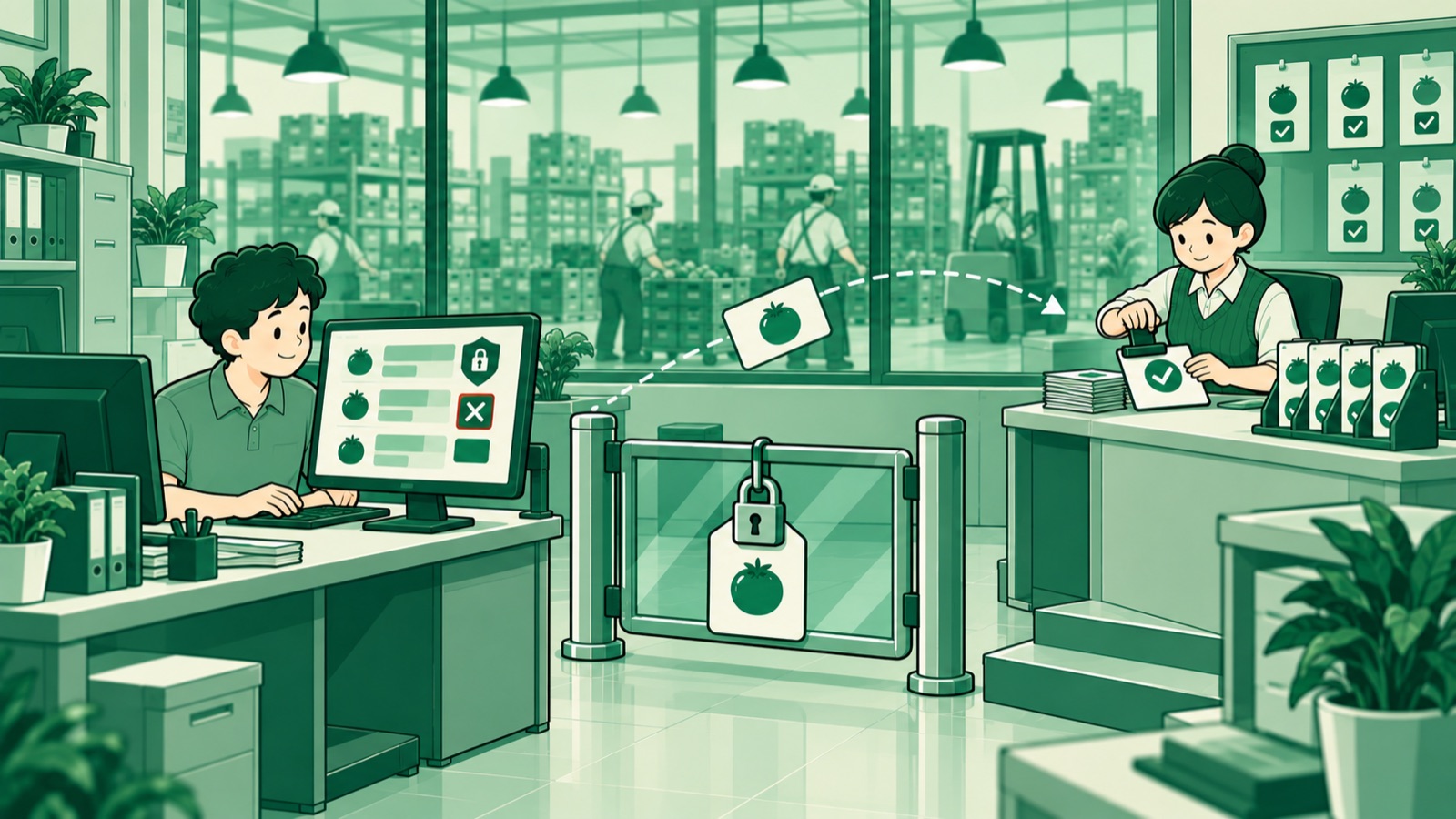
For a regular registration, the system compares the selling price with the tender reference in force. A price below the reference cannot be saved, and an item with no tender reference is held back as well. That check immediately stops a price that does not meet the conditions from being used. The reference, which used to sit on the tender results sheet, is now a limit in the everyday work of registering prices.
When a cross-subsidy is needed, an admin submits a special price for specific items and for customers within the same price agreement. The request also states which tender period it covers. The Price Controller reviews it and decides whether to activate it. This way, a lower deal still goes through a clear decision before it replaces the usual price limit for that sale.
Once approved, the negotiated price becomes the lower limit for the item, customer, and period that were requested. A request that is not activated by the end of the tender period stays on record as history, but it does not apply to lower the price. A special decision has a time limit and a scope, so a price meant for one need does not automatically apply to other items or customers.
Each customer belongs to only one price group, and Sales cannot move a customer on their own; changes go through the data stewards, so it is always clear which price agreement applies to that customer.
The result shows up in one sequence of events. A price request lower than the tender reference is not activated, so the price stays at the tender reference, while the goods are still sold to the customer concerned in the same period. The gap between the reference and the requested price is what does not disappear from the margin, calculated on goods that were actually sold. So the system's limit works on sales that are running, when a request has not yet been approved.
Every price concession now leaves behind a recorded request and decision. Tracing a price leads back to the item, customer, and period of the agreement concerned. The sales team still negotiates with customers; the Price Controller judges the exception; the system applies the limit that is in force. That division of work leaves room for cross-subsidy while keeping the reference for everyday prices.
My lesson: room to negotiate has to run together with a limit that applies before goods are sold. By deciding where the check sits and who decides exceptions, pricing decisions keep serving commercial needs while protecting the margin.