
The Purchase Price Was Agreed. Why Was It Still Bought at a Higher Price?
Supplier quotes were compared every week, yet the agreed price still sat in a separate spreadsheet when the team recorded a purchase.
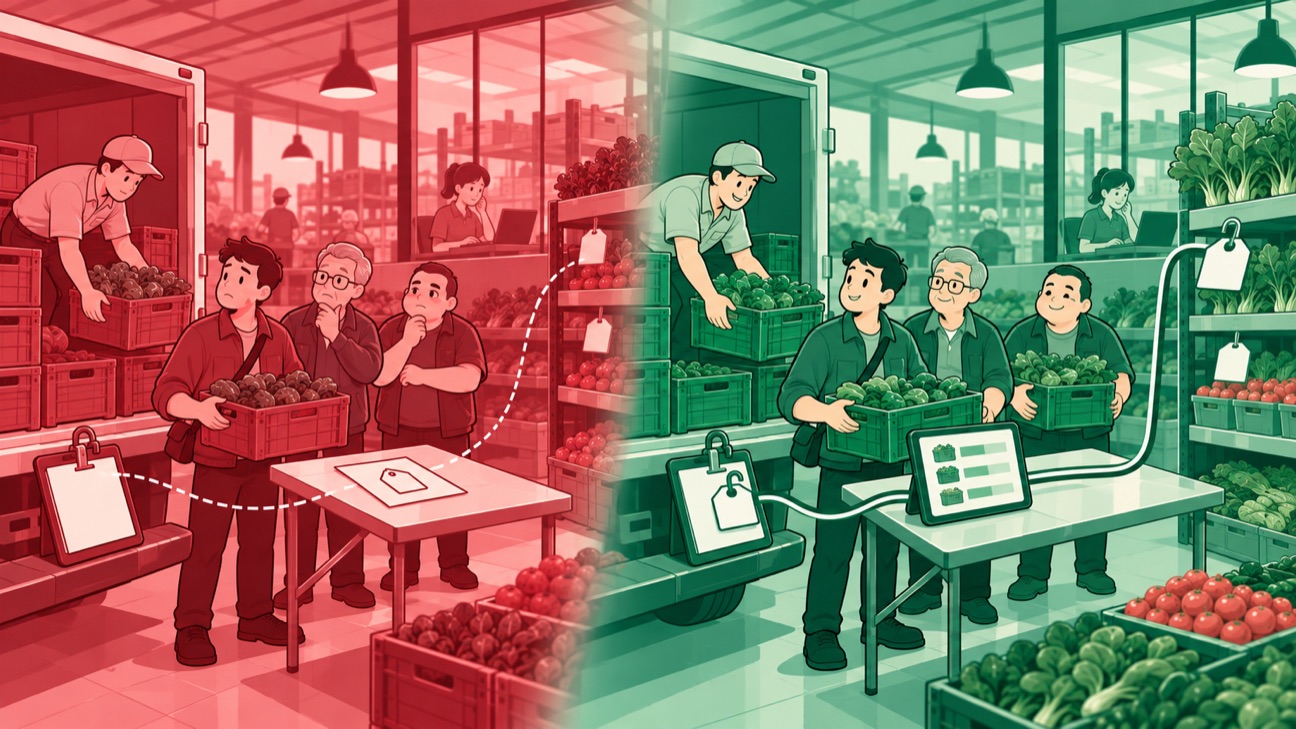
Conceptual illustration. The case is real; company details are disguised.
Every week, Purchasing collected supplier quotes for the distribution of fresh food. The price control unit reviewed the results and set the reference price for the next period. This work already ran through a tender application, the place where quotes are compared and the source of purchase is chosen. But the application was separate from the operational system. Tender results moved into Excel or an online spreadsheet for the purchasing and sales teams to use.
When a transaction was recorded, the chosen price was not yet present as a directly connected benchmark. The gap between the reference price and the actual purchase price was blended into the overall margin. Business managers found it hard to see which part came from purchasing decisions and which came from sales. The price agreement existed, but whether it was used in a transaction still depended on whoever opened the spreadsheet.
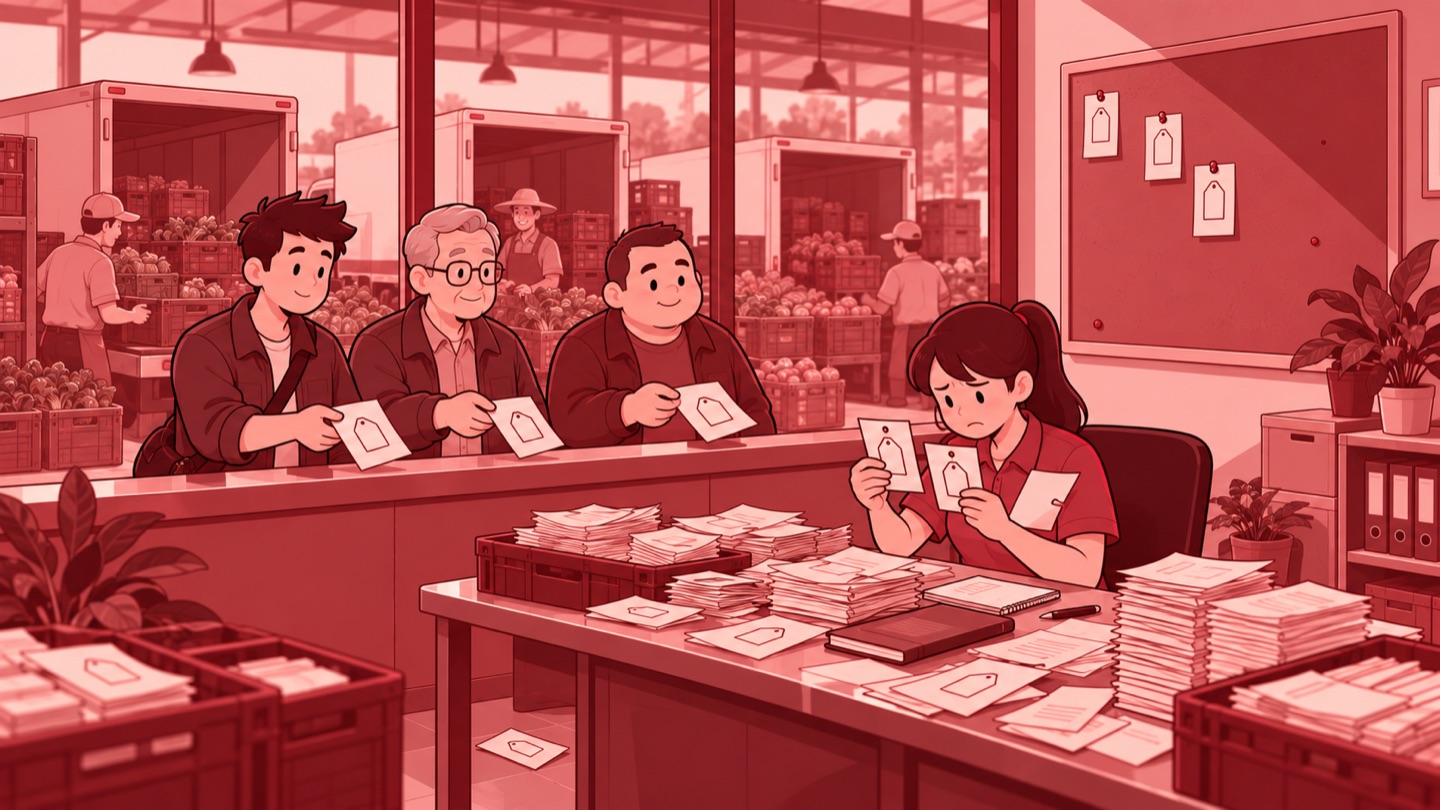
As head of the IT Division, I worked with the team to join the tender process with the purchasing and sales systems. I chose to bring the agreed result to the place where transactions are recorded. Purchasing still looks for suppliers and enters their quotes. The price control unit makes sure the quotes are complete, decides which goods will be sold, and reviews the comparison before activating the period. The system handles the calculation, while the process owners still decide which price applies.
In the new process, the system picks the quote with the lowest final price after taking the applicable components into account. The price control unit can replace that choice before the period is activated, with a reason for the change that must be filled in. To form the basis of the selling price, the system adds transport costs and a margin reserve according to the goods category. The result is known as Final Cost, the reference used as the floor when the team sets selling prices.
The next question sits on the purchasing side: if a reference price exists, why doesn't the system reject a higher purchase price? The purchase price is deliberately not locked at the time of recording. The team needs to make covering purchases, meaning extra purchases on the market when supply falls short, is damaged, or does not meet specification, and their price can differ from the tender result. A lock at the front would close off that room. So the tender price appears as the initial value on the purchase invoice, and the price can still be changed at the time of recording.

The key is at payment. Finance AP, the finance function that pays suppliers, compares the invoice price with the tender reference price. A purchase above the reference is not simply paid. If the reference price is applied, the company does not pay the difference and it becomes the buyer's responsibility. If a supplier's price increase is legitimate, the invoice price can be used, with an explanation when the payment is submitted to management, and Finance AP decides case by case. This is a process rule, not a judgment of the person.
To read the purchase itself, the benchmark is the tender base price before transport costs and the margin reserve, not the Final Cost used for sales. This separation keeps the assessment of a purchase focused on the price of goods obtained from the supplier, while the components for setting the selling price keep their own function.
The comparison that used to be blended into the overall margin can now be read on its own. A tender result does not stop at choosing a supplier: its reference price becomes the anchor when checking invoices and paying for purchases. Purchasing, the price control unit, and Finance work from the connected result, with different responsibilities at each stage.

A purchase price above the agreement therefore has to be read together with the need behind it. Some goods must be sourced again to keep operations running, and some price gaps should not simply be paid. The system provides the comparison; payment holds to the reference price, and legitimate increases are reviewed case by case. This choice protects the link between the planned price, the transaction that took place, and the decision on exceptions.
My lesson from this work: control over purchase prices does not have to lock the recording; it works best where the money leaves. Buyers stay free to move when goods run short, and payment holds to the agreed price, with legitimate exceptions reviewed case by case.